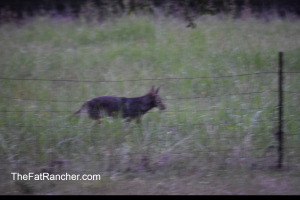
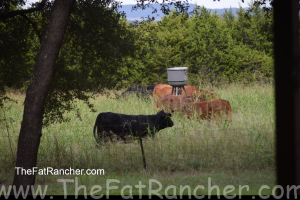
Well, Liberty Hill is still in the midst of our winter weather (a balmy 70 degrees most days), we are still seeing winter winter critters.
Most notable are the American Robins that swarm (literally) into town to feast on Juniper berries. Oh, and drink. They drink and drink… Must be the Juniper berries.
Our 2020 bumper crop of Cardinals are still around.
Mia even captured a wayward dragon fly at rest.
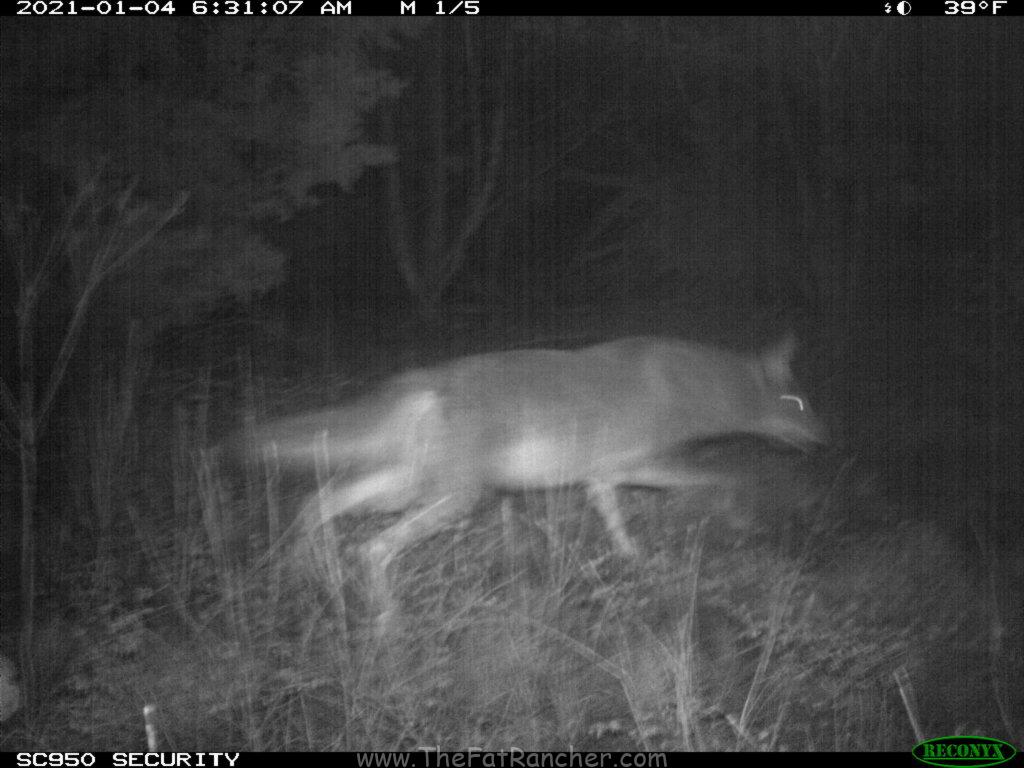
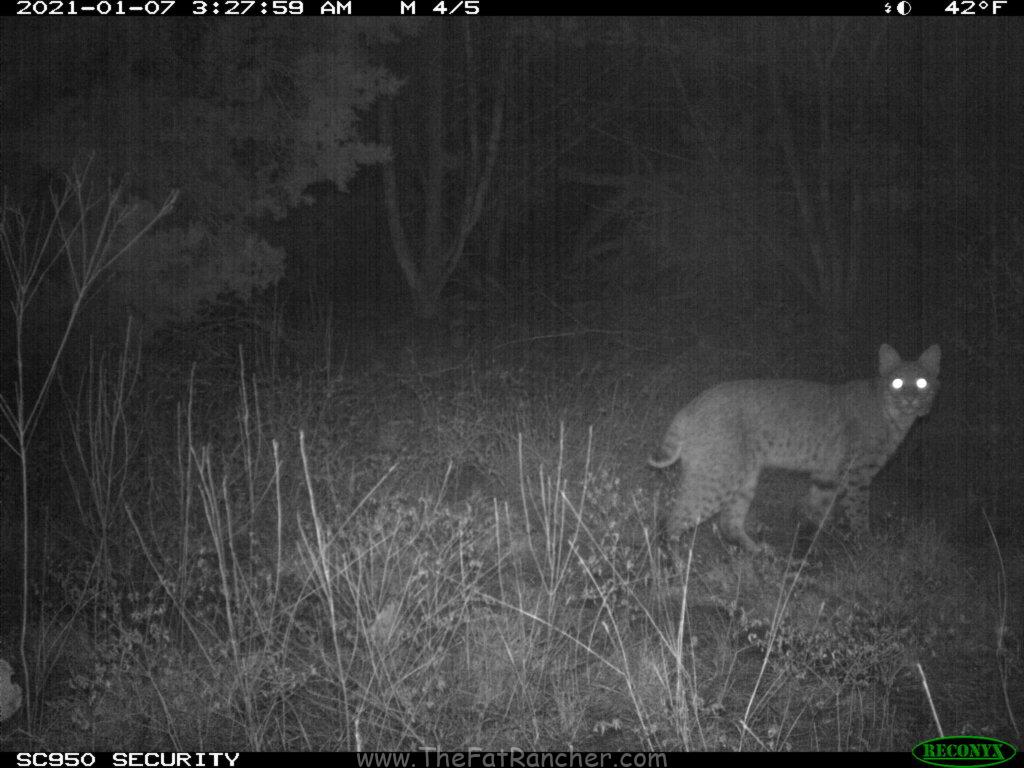
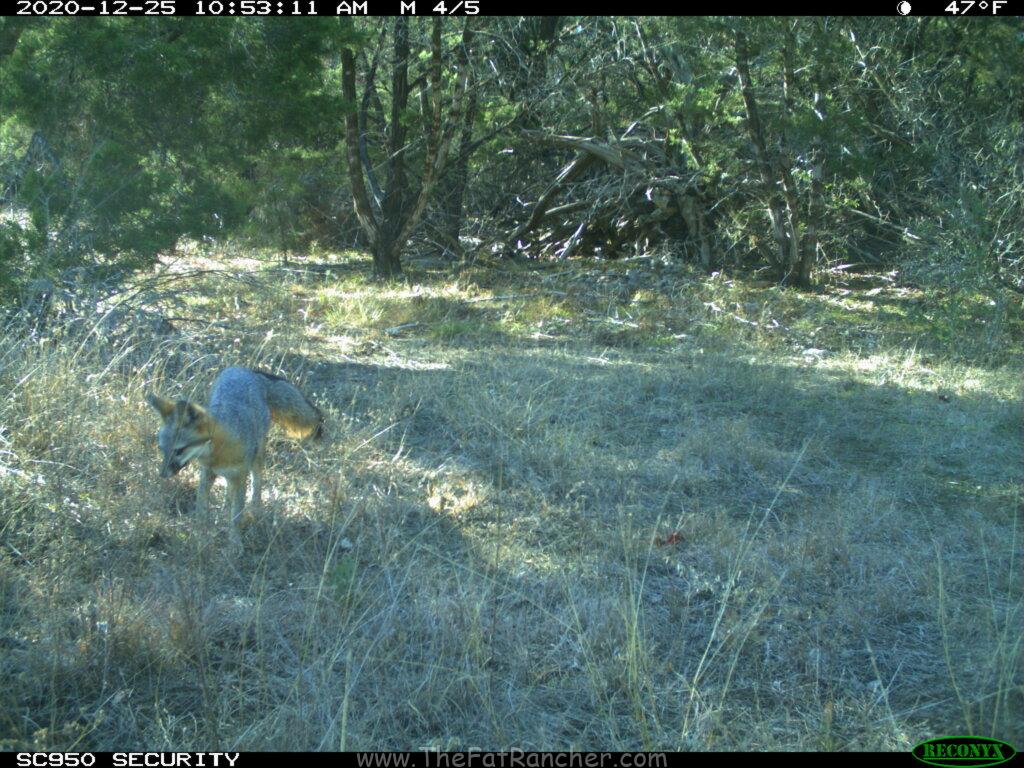
Meanwhile, the night brings out various predators:
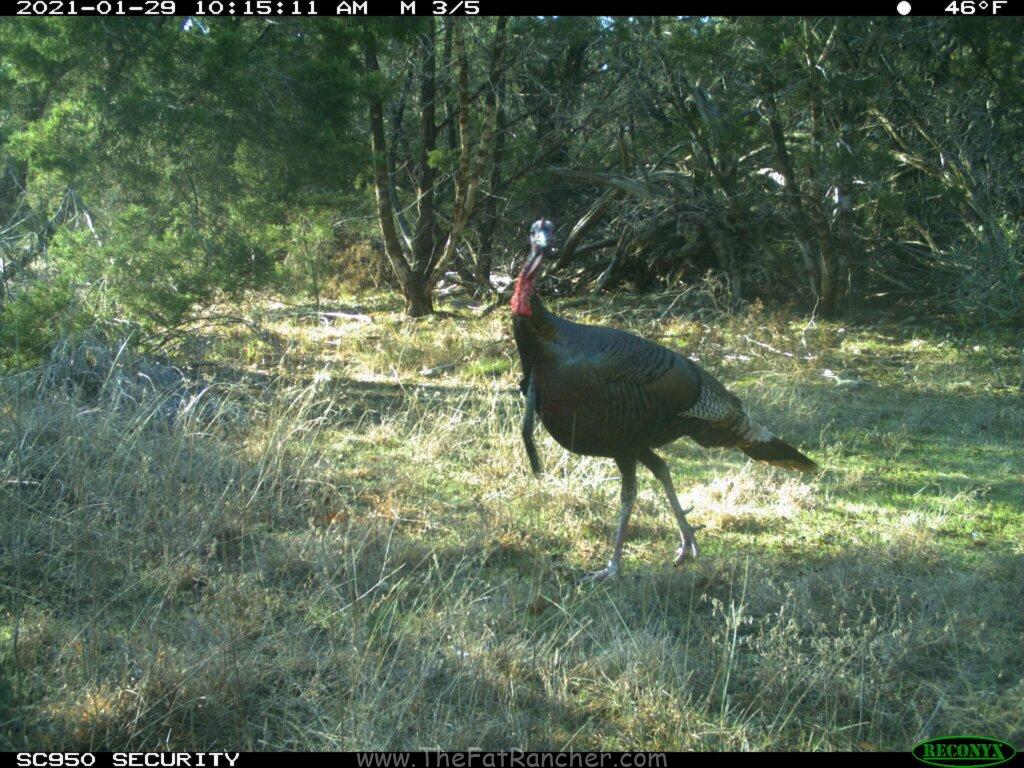
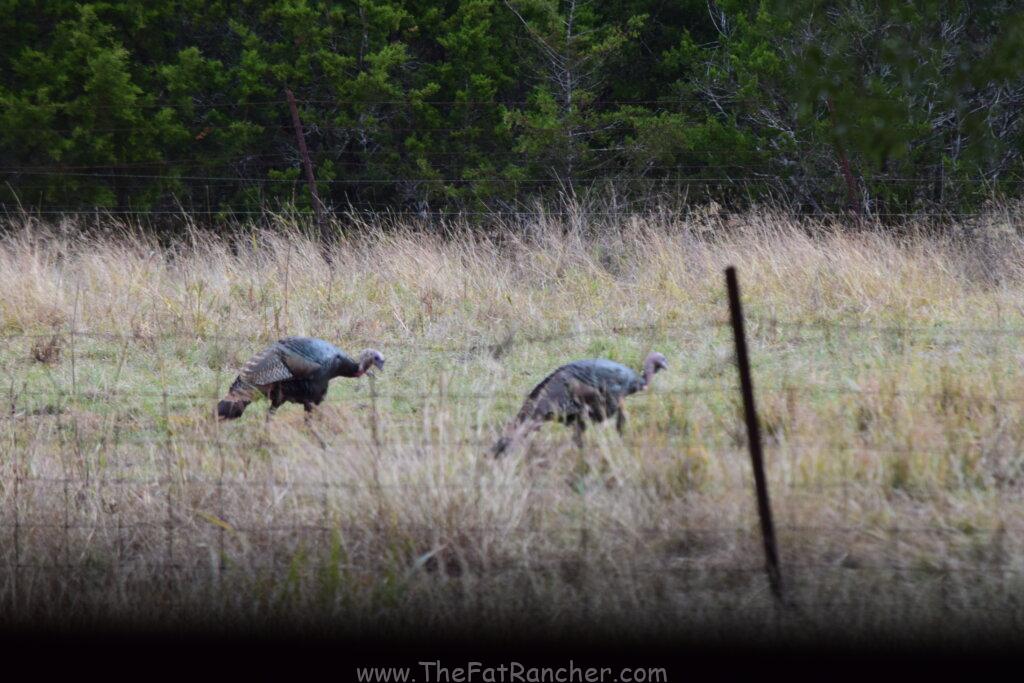
And, my favorite, the Rio Grande Turkey.
Special thanks to Maria Kendall for the Nikon photos.
As anyone on a farm or ranch can tell you, diesel fuel storage around can be a hassle.
When we moved out to our ranchette, I bought several 5-gallon “jerry cans” to keep a supply of gasoline and diesel. These allow me to keep going during the day and push my fuel runs to the evening. However, true luxury is having a supply tank at the ready, forgoing the nightly fuel raids.
Fuel Storage
The Fat Rancher looked into buying one of those elevated steel tanks that real ranchers have to keep their equipment fueled. However, I wasn’t keen on having the local fuel truck trundling out to refill the monstrosity.
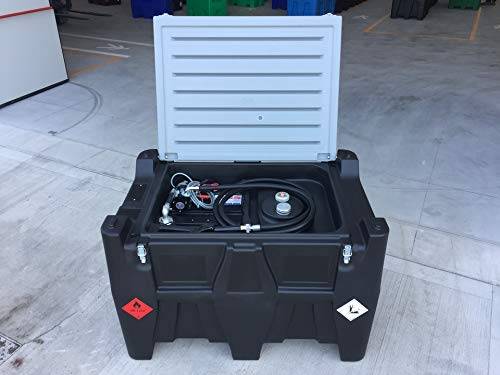
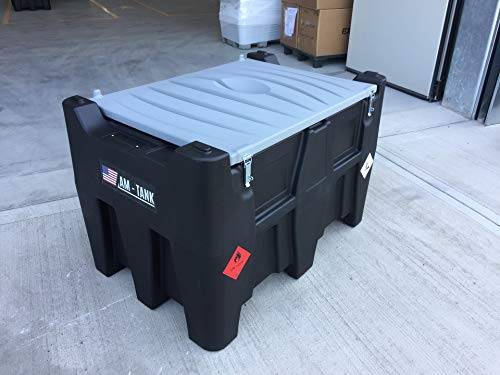
So when I saw the American Fuel Tank diesel shuttle, I was intrigued. Call this Tupperware for your tractor. It’s a blow-molded plastic tank with an integral fuel pump and dispensing handle. But don’t be fooled: This nifty product is imported from Italy, which explains some of its cost.
American Fuel Tank AM-TANK-DIESEL-116gl
With a 116-gallon fuel storage capacity, this tank has a built-in 12-volt pump and fueling handle. Just connect the supply leads to the battery on your equipment and start pumping. Properly secured to a forklift, the tank can be moved when full.
Operation
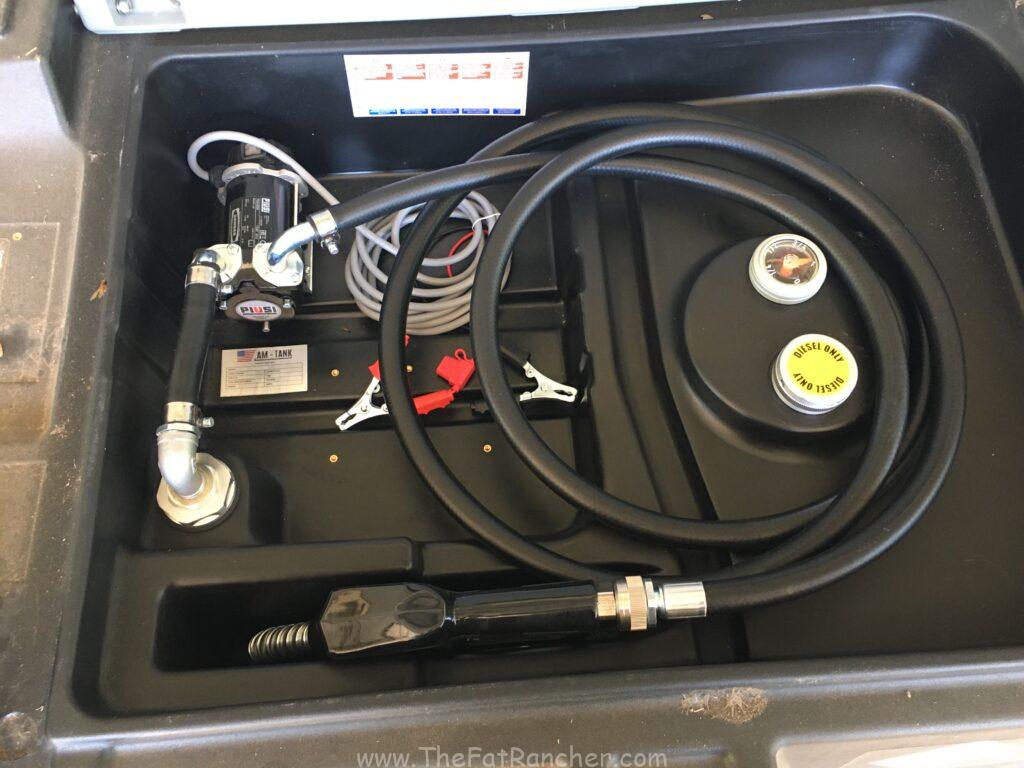
The fill cap is under the protective lid and adjacent to a mechanical fuel gauge. The unique integrated design has recessed storage for the nozzle and even drip galleys to minimize any mess. The business area is protected from rainwater by a raised lip and a cover that fits over that lip.
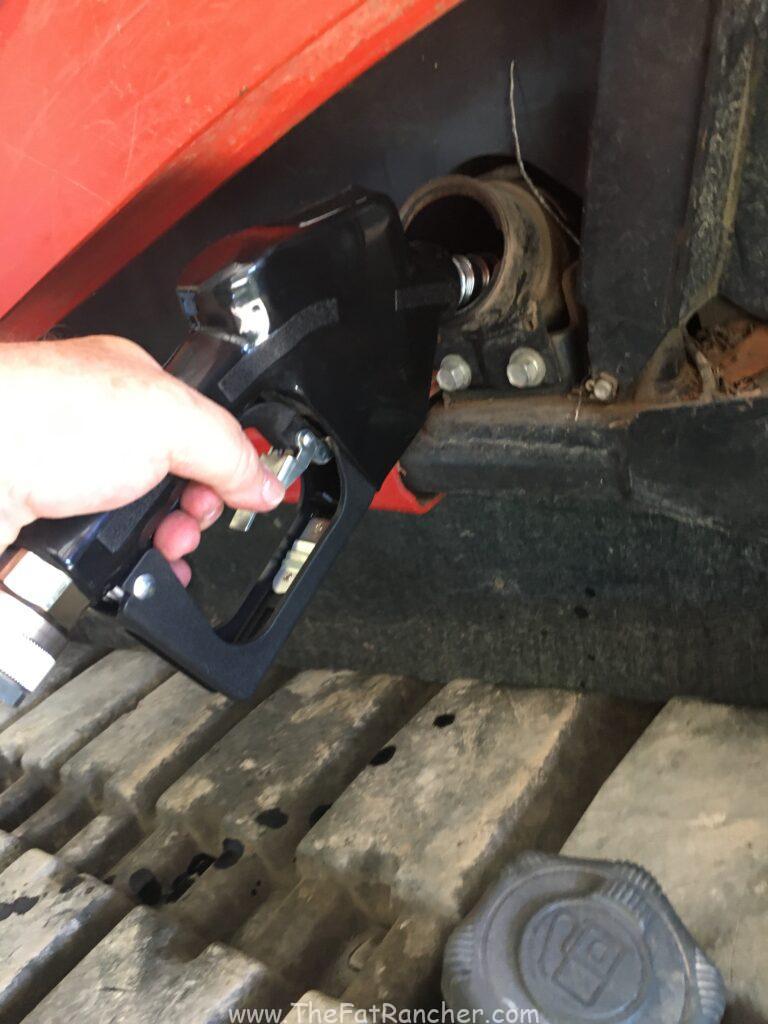
The fuel nozzle has a handle lock auto cutoff.
Operating the AFT Diesel Tank is a no-brainer. The pump has an on-off switch and fuel bypass to help cool the pump when fuel isn’t flowing. The pump volume was more than adequate and the hose nozzle operates just like the nozzle at your favorite gas station. Note that leaving the pump running with no fuel flowing will eventually cause the pump to thermal cycle off. But really, your 15-20 gallon equipment tank is going to fill pretty quickly. So there really isn’t any reason to leave it unattended.
The lockable hasps are best used to keep the lid in place. They wouldn’t stand up to a screwdriver pry, so they really aren’t for security. If you are worried about theft of your fuel, you would be better off spending $2500 on a steel fuel storage solution with a steel cover.
The AFT tanks come complete with the exception of a fuel filter. But that can be added at a nominal cost. The nice thing about these tanks is that you can load them on your trailer and take them down to your local gas station and fill them up. Then bring them back to the ranch and unload it.
Conclusion
Pricing on the 116-gallon diesel shuttle is $1199 plus shipping. Not cheap. But what price convenience? The price is comparable to a standing gravity-fed tank. However, you get the added benefit of portability. And, it will never rust out…
Note that this particular tank is for diesel fuel only. AFT has tanks rated for gasoline but they are $300 more expensive. I imagine this additional cost is due to the static management of the components.
Why does The Fat Rancher need a 72” grapple rake? Well, once the lowly Juniper has been felled, it’s time to process the trunks.
The Fat Rancher keeps all “logs,” those parts of the cedar that are straightish and longish. So a quick buck (removing the top of the log) with the chainsaw followed by limbing (cutting outgrowths off the trunk) leaves two piles of tree: Burn pile fodder and log stock.
In the past, The Fat Rancher utilized his Mule UTV with a drag chain and a chain grubber. The chain grubber is a manly contraption made of two steel rings with three chains affixed. These chains are fashioned with spikes so that, when the smaller ring is run through the larger ring, the chain tightens around a log gripping it with the teeth. This makes a quick hookup to drag the logs to the storage site. Old fashioned, cheap and lots of work (installing and removing the grubber).
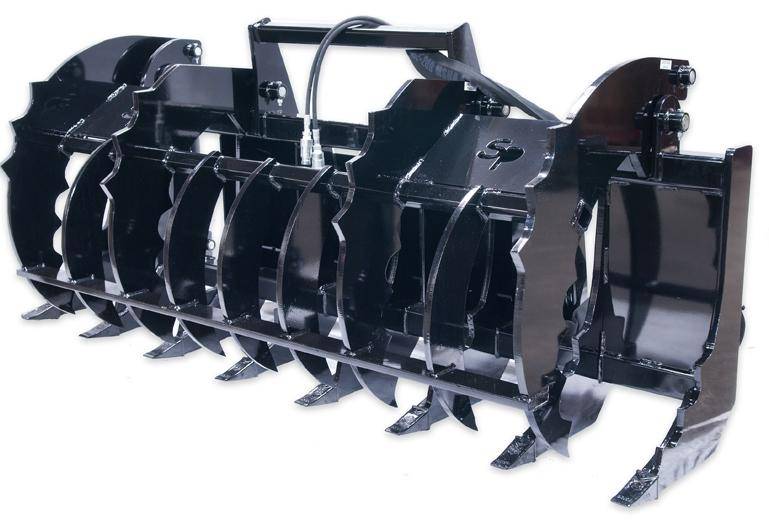
Photo courtesy Skid Pro Attachments
Upping the Game
Recently The Fat Rancher bought himself a hydraulic grapple to make the post cut process go faster.
Anyone who has ever purchased farm implements knows that there are dozens of companies big and small that make skid steer attachments. The challenge is to find one that is well designed, built with good materials and not obscenely expensive. I settled upon a product from Skid Pro Attachments out of Alexandria, MN.
Skid Pro Attachments does not post a catalog or pricing on their website. Instead, they have several videos showing how they design and assemble their products and then ask you for an email to send a price list. The Fat Rancher did just that late afternoon.
Almost immediately I received the price list in return email and could peruse the options and prices. That evening, Randy at SPA sent me an email offering guidance. Equipped with my machine model and what I wanted to do, he recommended a 72″ Grapple Rake.
Photo courtesy of Skid Pro Attachments
Let me stop here to point out that the initial consultation was invaluable. I thought I knew what I wanted. Randy pointed me in a different direction which turned out superior. In addition to the model he recommended being more appropriate for my task, he also recommended a much stouter product.
This was recommendation was prescient as I quickly discovered that using an implement with enough strength to stand up to the equipment it is attached to is key to productivity. I had tried using the brush fork set that I bought for my tractor and promptly tore it up on the 95 HP track loader. I don’t have this problem with the new implement as it is beefy enough to take my mistakes in stride.
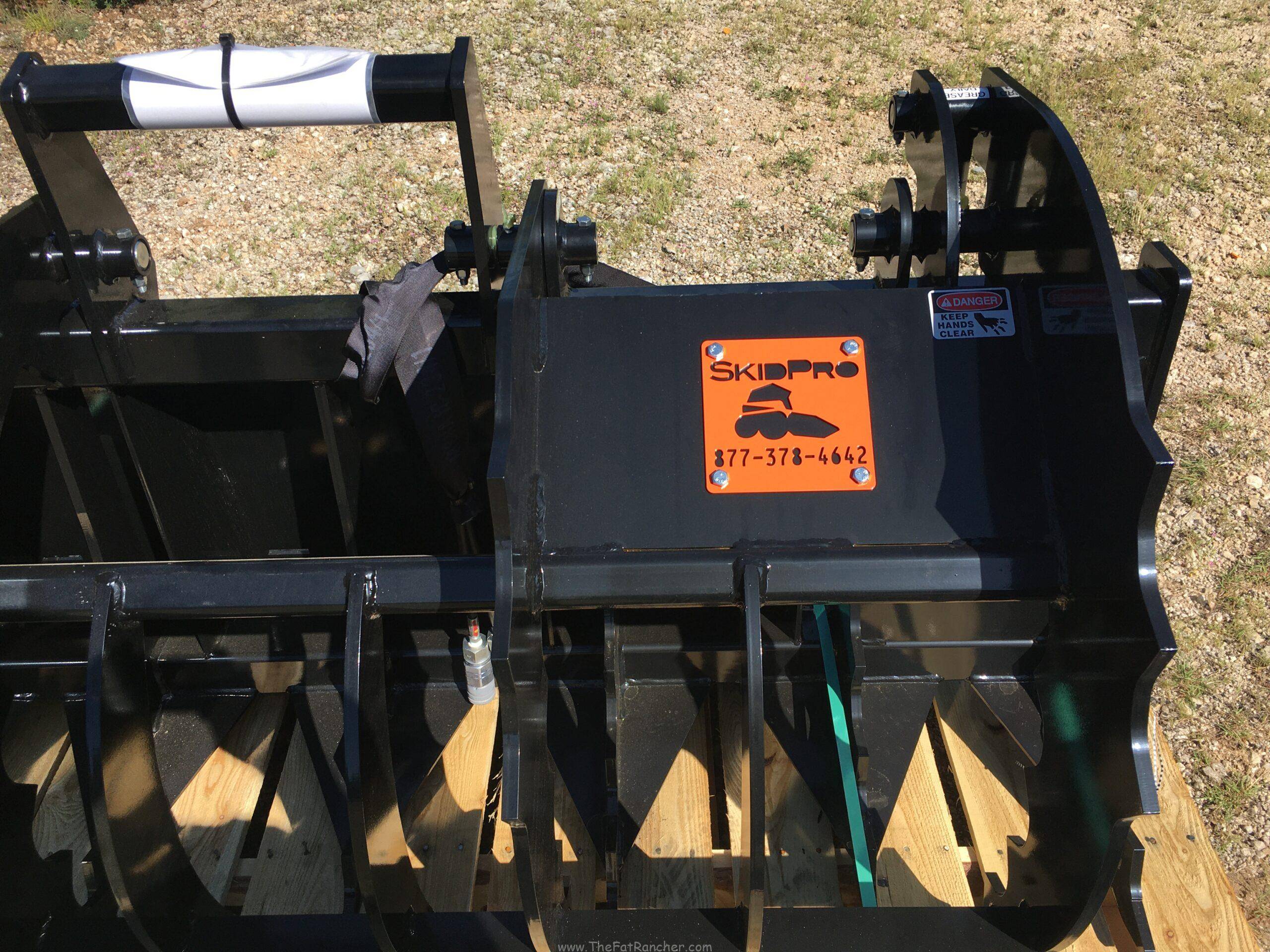
Randy recommended a Grapple Rake, a clam style grapple. With dual 3″ actuators, this grapple opens up 42 inches. In fact, it opens up wide enough to use the grapple top as a back rake.
Made throughout with 80,000 psi tensile-rated steel, the lower teeth are short and fully gusseted to minimize damage due to unintended “shoveling.” Yes, that’s right, sometimes The Fat Rancher gets so excited that he pegs the rake into the pasture. Now when that happens there is a big hole but no damage to the rake. The bottom tines are 1.50” and the top tines are 0.75” thick.
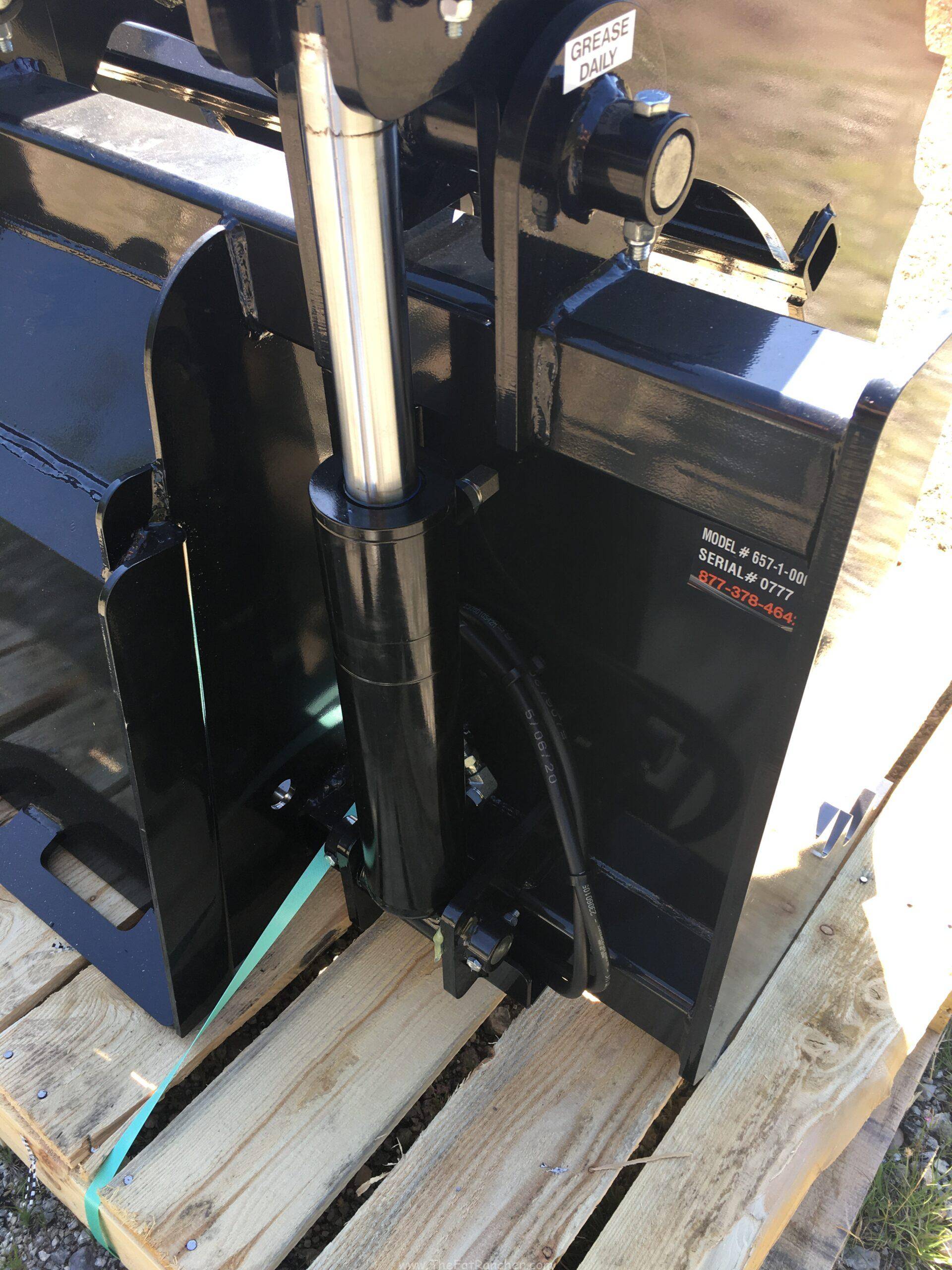
Back cylinders are fully protected and hoses are routed through tubular steel for protection. Naturally, all pivot points are fitted with zerts for lubrication and employ hardened over-sized pins.
Shorter bottom tines are perfect for digging, grubbing, ripping and sifting of heavy loads. The robust back-plate & heavily gusseted lower grapple frame give unreal strength and hopefully longevity
The Purchase
The purchase was painless. Randy ensured that I had the purchase information I needed to make a decision and consistently followed up without being pesky. Once I made a purchase decision he saw that the transaction, and dispatch occurred in a timely fashion. Randy also followed up after delivery occurred. When was the last time a vendor did that for you? It’s apparent that Skid Pro Attachments wants their customers for the long haul.
The Set Up
If Randy was the consummate professional, the professionalism of Skid Pro Attachment became even more evident once the product arrived.
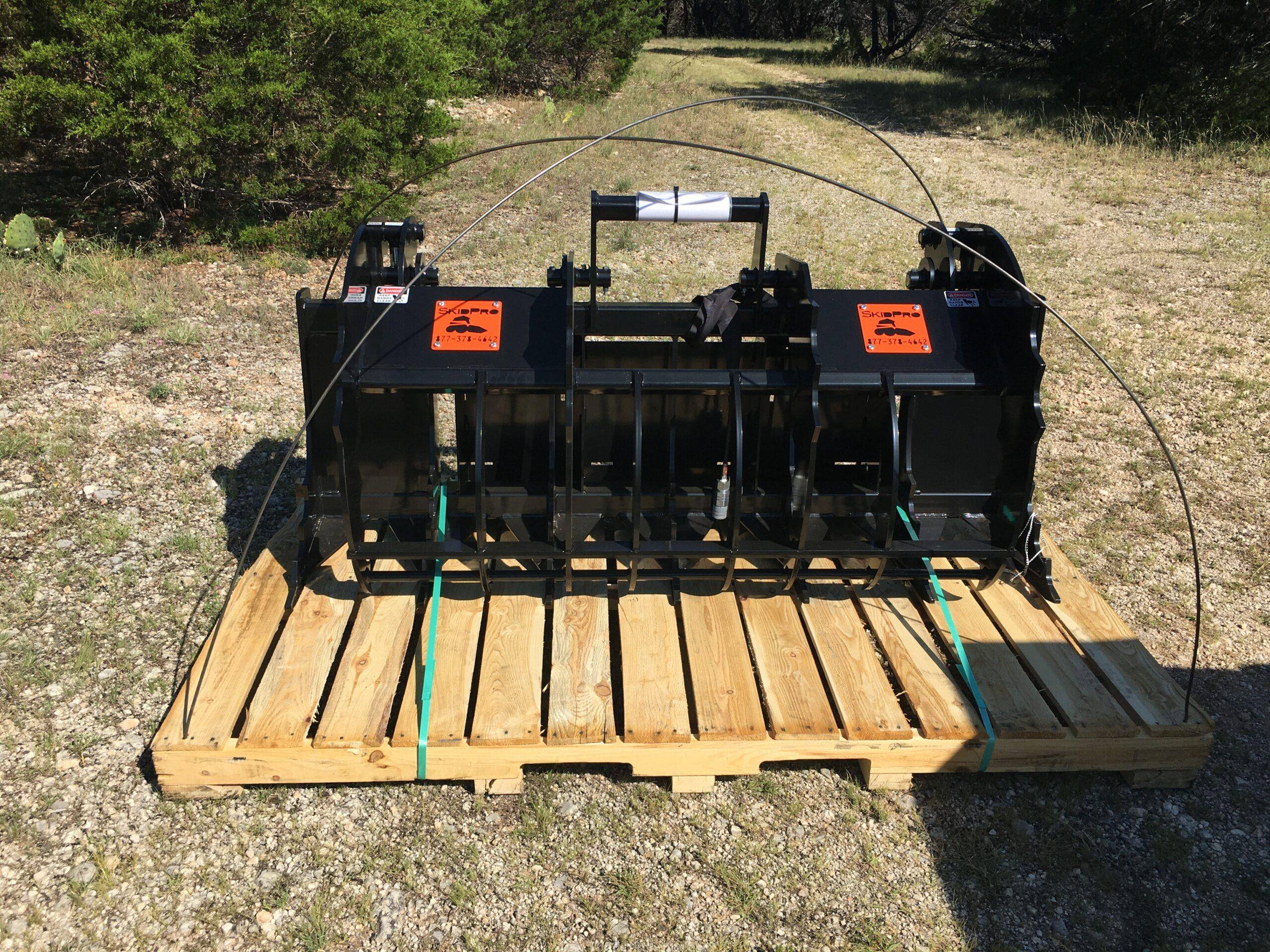
The attachment arrived strapped to a brand new wide pallet. Nothing unique there. However, the covering was surprising. The entire tool was covered in a professionally printed Tyvek style “tent” with the company logo emblazoned. Two steel dowels mounted on the pallet in a cross fashion kept the tent erect, discouraging anyone from placing products on top of the tool. Why is this important? Who wants to buy a pricey new tool and have it arrive with parts flopping about and scratches on any protrusions. The Fat Rancher like putting the first scratches on his toys himself!
Fastened to the top of the tool was a poly bag with a professionally produced instruction manual and parts list. All the Zerts had been greased prior to leaving the factory and a cursory inspection showed that the grapple was ready for work right off the pallet.
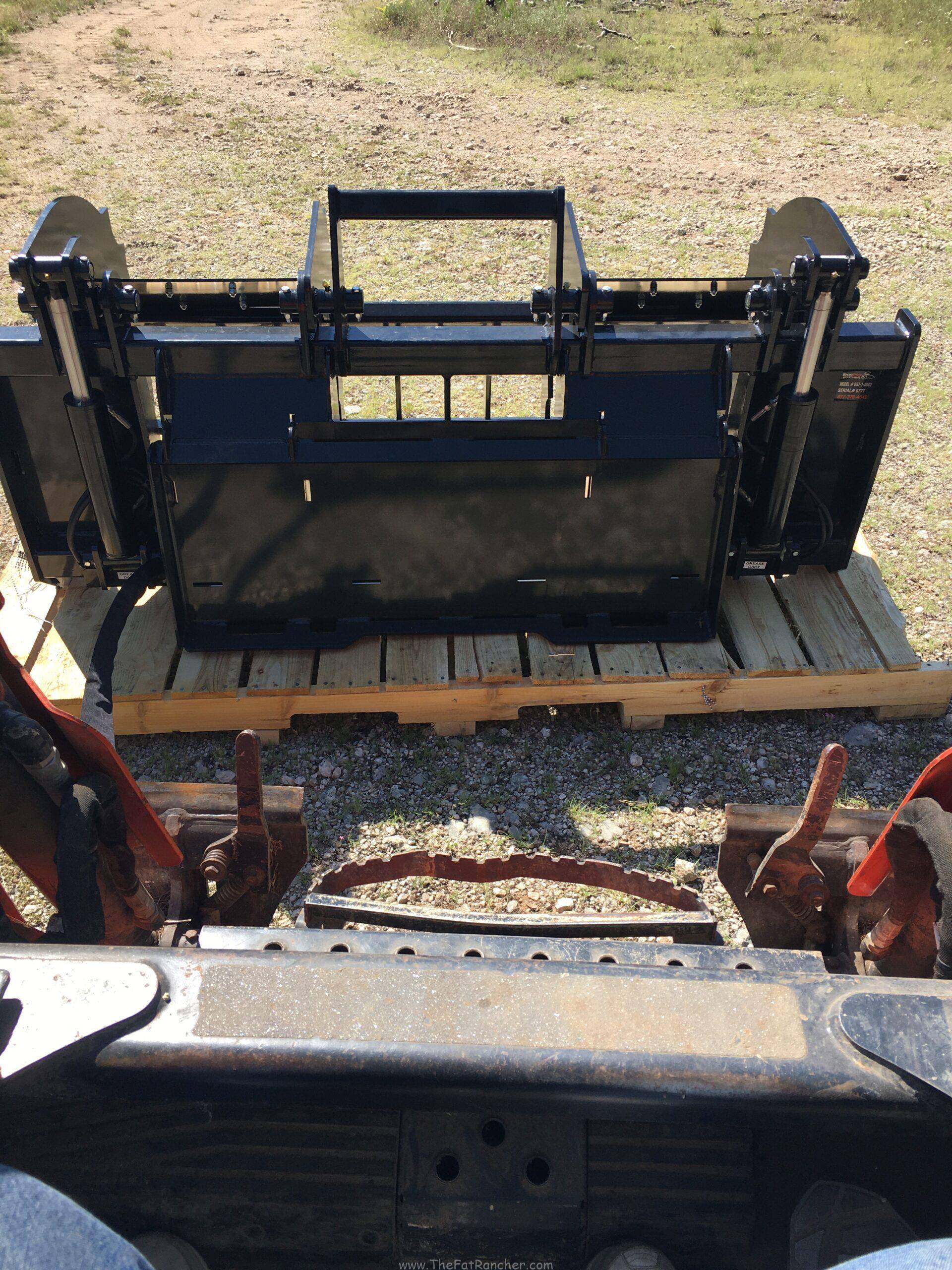
Moving the track loader up to the grapple, I marveled at the long hydraulic hoses which permitted me to attach the fittings while walking between the tool and the track loader. My thought at the time “that length is nice, but may be problematic.” Again: Prescient… After attaching the tool, it appeared that there was no issue with the hydraulic lines interfering with the arm operation and I was off.
Grapple Rake Operation
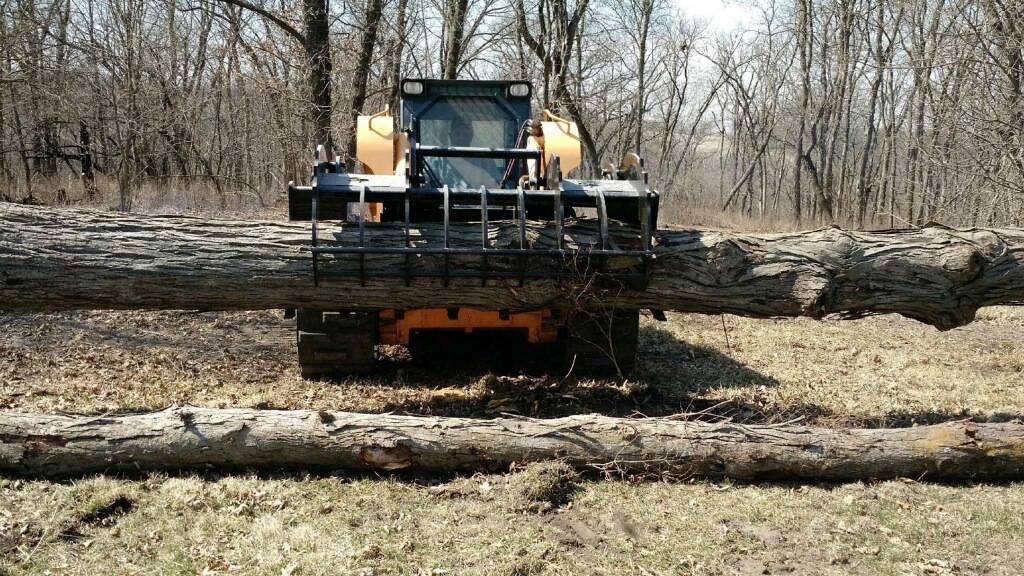
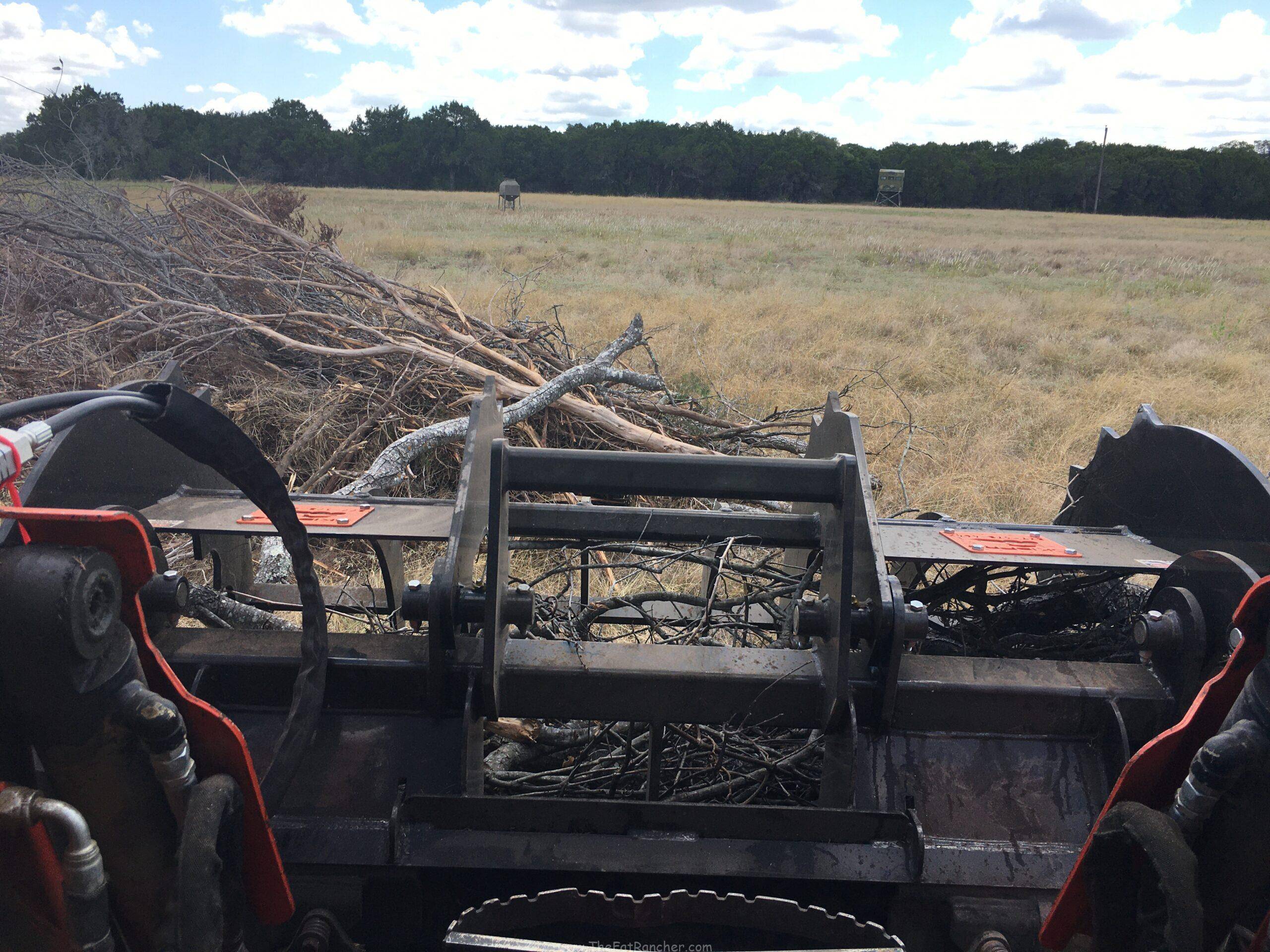
Operation of the grapple was smooth and the short, highly gusseted, lower tines were a blessing. Soon I was spooning tree limbs onto the burn pile like a pro.
However, on a subsequent fetch, a tree limb perpendicular to the grapple rake caught the hydraulic lines and planted them squarely under the track. You can guess what happened next. A “twang” later and the life blood of my precious track loader was squirting out the front like some sort of severed artery! Chastened, I decided that I was done for the day.
The moral of this story? Quality equipment can be eclipsed by operator error. I should have waited to operate the unit until I had installed a hydraulic hose keeper to keep the hoses out of the work zone. Randy has since informed me that they have a spring keeper which can help on installations where the hoses have excess length.
In the end, I replaced both hoses (shorter this time!) and I was back in business grappling and dumping.
Pro-Tip: If you have an open cab you had better have some goggles and a dust mask. Grappling brush can be dusty business and you don’t want to be careening around in the track loader with dust in your eye.
Bottom line? Quality construction and professional execution on the part of Skid Pro Attachments means that I’ll call these guys first when I get ready for my next implement. Randy can be reached at Randy at skidpro.com Tell him The Fat Rancher sent you.
(No compensation or consideration was provided to author for this review)
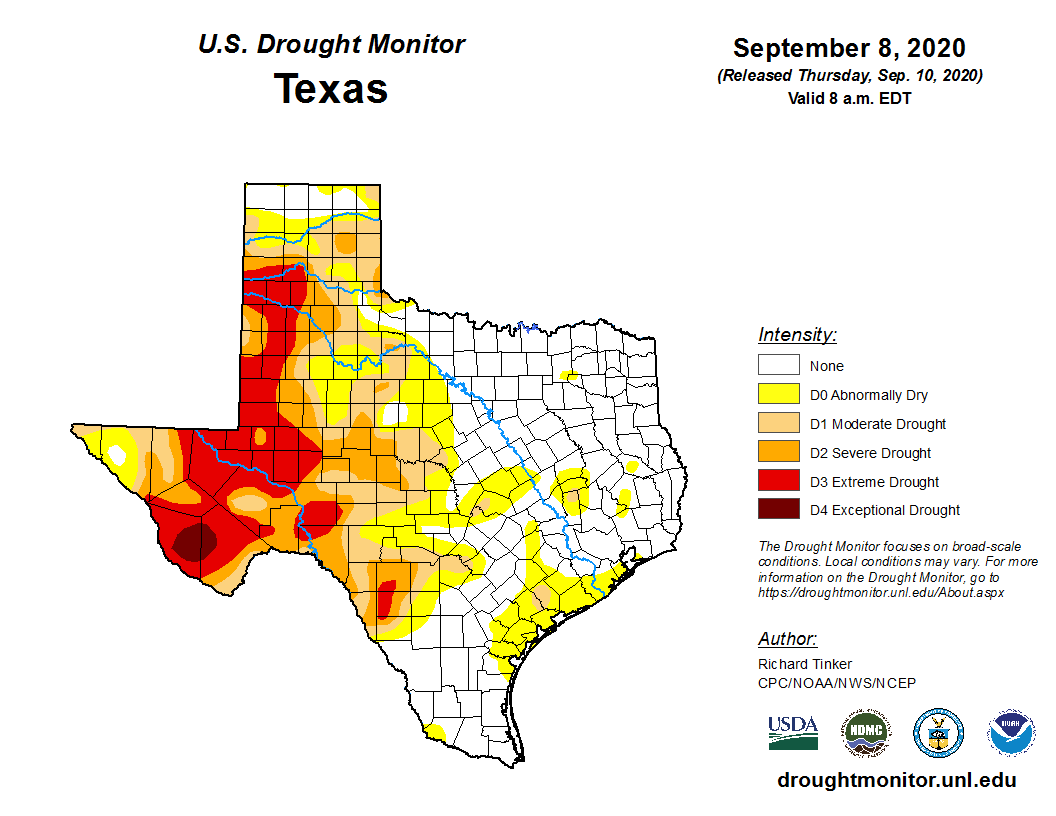
The drought has returned to our neck of the world making supplemental water sources important. Interestingly, the drought boundaries are pretty granular, weaving this way and that. As it happens, The Fat Rancher’s ranch is in an area defined as “Moderate Drought.”
A wildlife guzzler is (a supplemental water source for wildlife) are not only popular with the critters, but an essential oasis during these droughts.
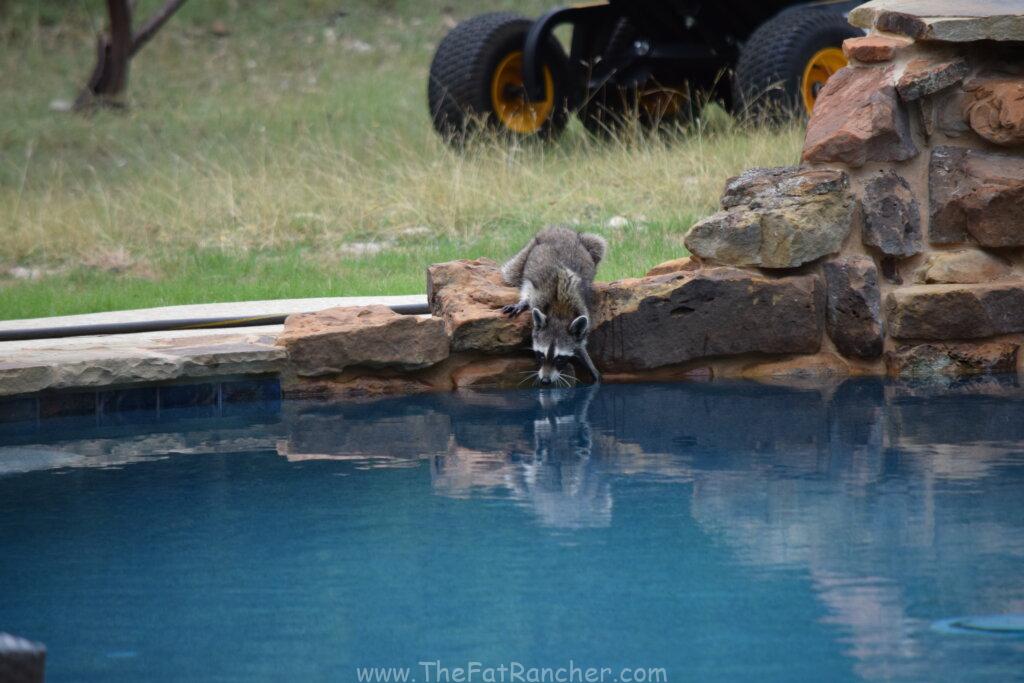
While drought appeared to break a couple of years ago, it’s been pretty dry this year. Even the deer have decided that a drink out of our bird bath is preferable to the available alternatives. And while the Fat Rancher likes to think of himself as generous, I’m not ready to accept use of our swimming pool as a critter watering hole. And that is exactly what it has become in the early morning hours…
This has prompted us to build some wildlife watering stations; So called wildlife guzzlers. See a Texas Parks and Wildlife publication on wildlife watering holes here.
Making the Wildlife Guzzler
My first try was with blue food-grade barrels. However, this presented issues with mounting spigots into the thin poly tank. Not to mention that they are butt-ugly eyesores.
As it happens, Costco (Good Ideas Rain Barrel) had some rain barrels on sale, replete with spigots and fill strainer. Better yet, they are tan colored, so I don’t have to repaint them to blend into the landscape.
The Good Ideas Impressions Corsican 50 was sold at our North Austin Costco for $89.00. Not exactly cheap. But hey, how much is your time worth? These made in USA barrels are already fitted with two screw outlets, two connecting nipples (in the back) and a fill screen on top. Also included inside the barrel are a diverter kit for home rain barrel use.
We installed the two spigots and toted the barrel out in our back yard (in an attempt to lure the critters away from the pool). We connected a Pet Lodge Ever Full Bowl to the barrel and filled the barrel up with water.
The only thing we added to the wildlife guzzler was a screen washer to the inlet of the bowl to prevent crud in the water from buggering up the needle valve in the bowl.
Danco Water Hose Washer with Screen
The result is a pretty decent looking watering station which gravity feeds into the bowl. Sure, you will have to clean the leaves etc. out of the bowl when you refill the station. But the sides are low enough that you shouldn’t have any drowned critters (an issue with tub style wildlife guzzlers).
All that remains is to mount a game camera nearby so we can checkout whether the critters will accept this gizmo over our pool!
Now, these wildlife guzzlers require manual refill. I use a food grade blue barrel with a 12 volt pump from www.amazon.com.
Yes it’s a pain to have to refill. But the only other option is to put a rainfall capture on the barrel, which I may do at some time. However, right now, there isn’t enough rain for this to work.
18 square feet will capture 10.8 gallons of water for every inch of rain. We have had <1 inch of rain over the last two months. Between critters and evaporation, this won’t keep the dish wet.
So, for the time being, manual refill is the answer.
Does enjoy a drink from the new wildlife guzzler
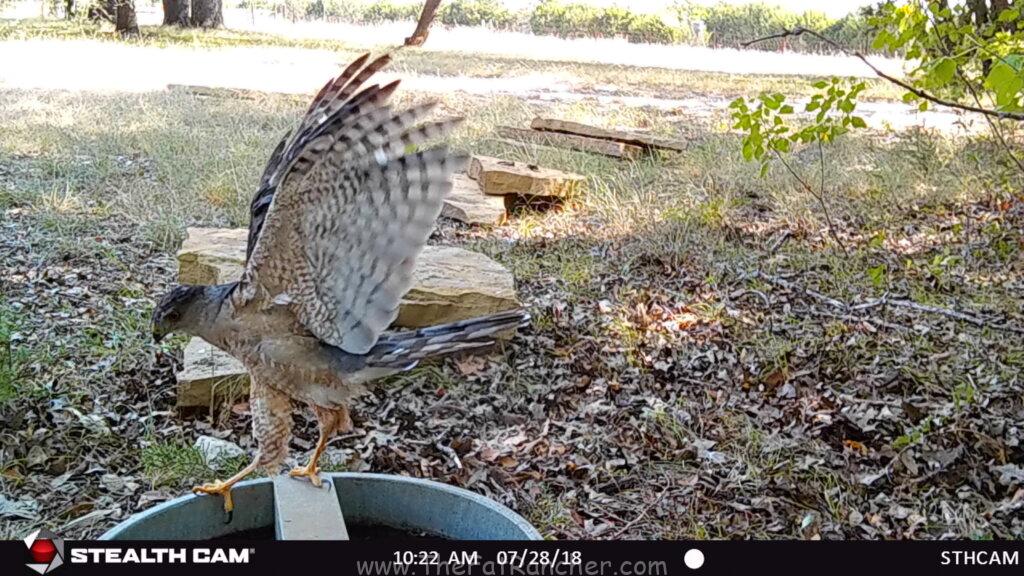
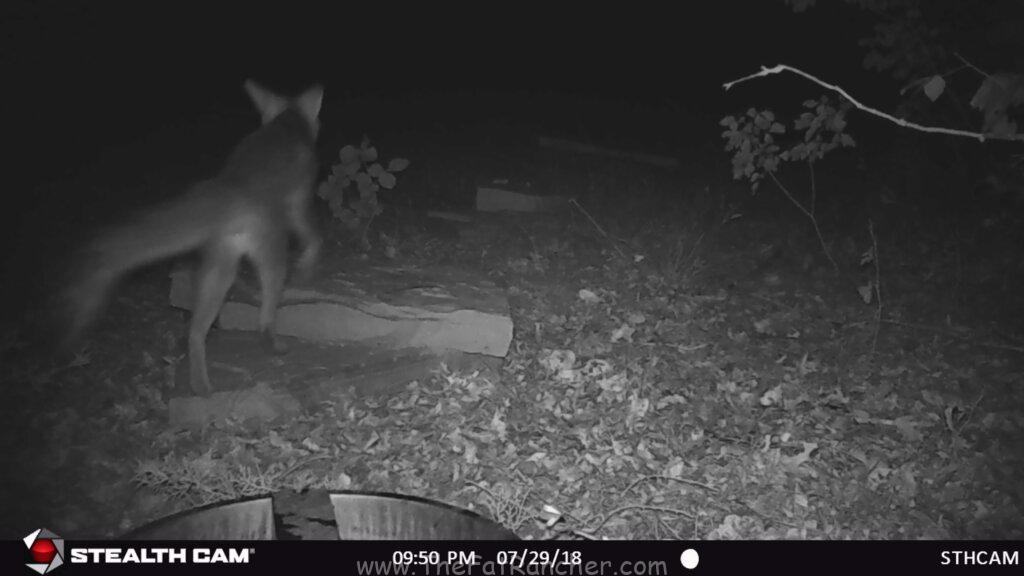
Red Shouldered Hawk balances on the guzzler.Mrs. fox likes to party at night.
Texas Redoubt will soon offer a complete wildlife guzzler kit for your ranch or lease. More information to come soon.
While I was in a “rearview mirror state of mind,” I purchased the World Mall 10L0L Universal Golf Cart Rear View Mirror for the Kubota SVL95-2S track loader from Amazon. Amazingly, these loaders don’t come with a mirror. I say amazingly, as the SVL95 operating in reverse would crush most compact cars.
Can you say “Wreck-it Ralph?”
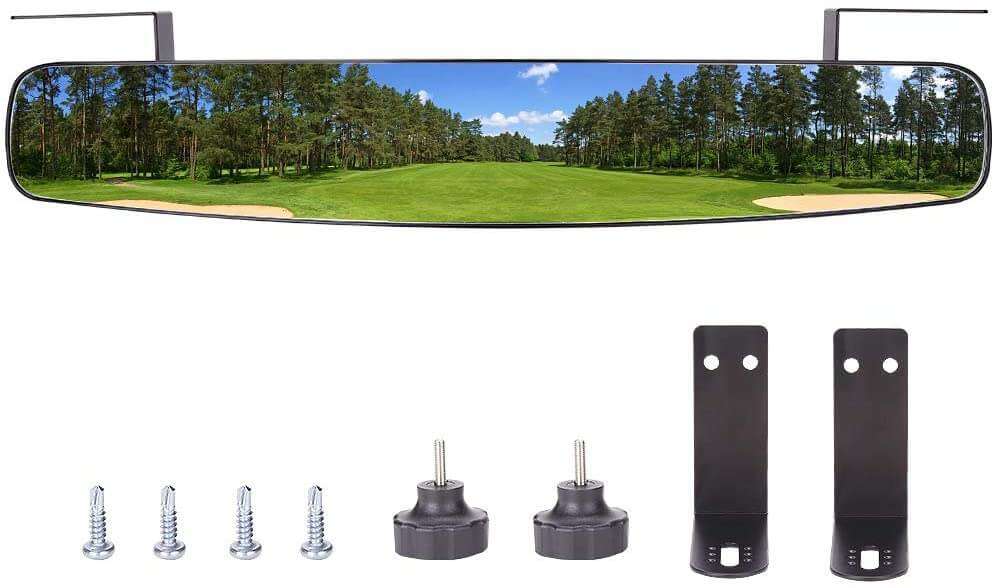
Anyhow, I chose the WORLD MALL Universal Golf Cart Rear View Mirror for this application. Like the Xislet 2020 above, this mirror is also convex. The Mirror cleanly mounts with two “L” brackets more suitable for the track loader.
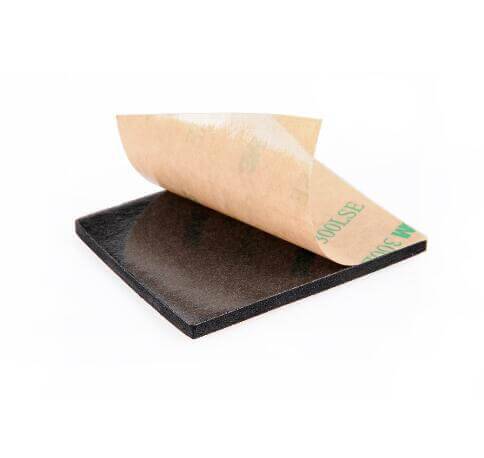
3M 300LSE Adhesive Pad
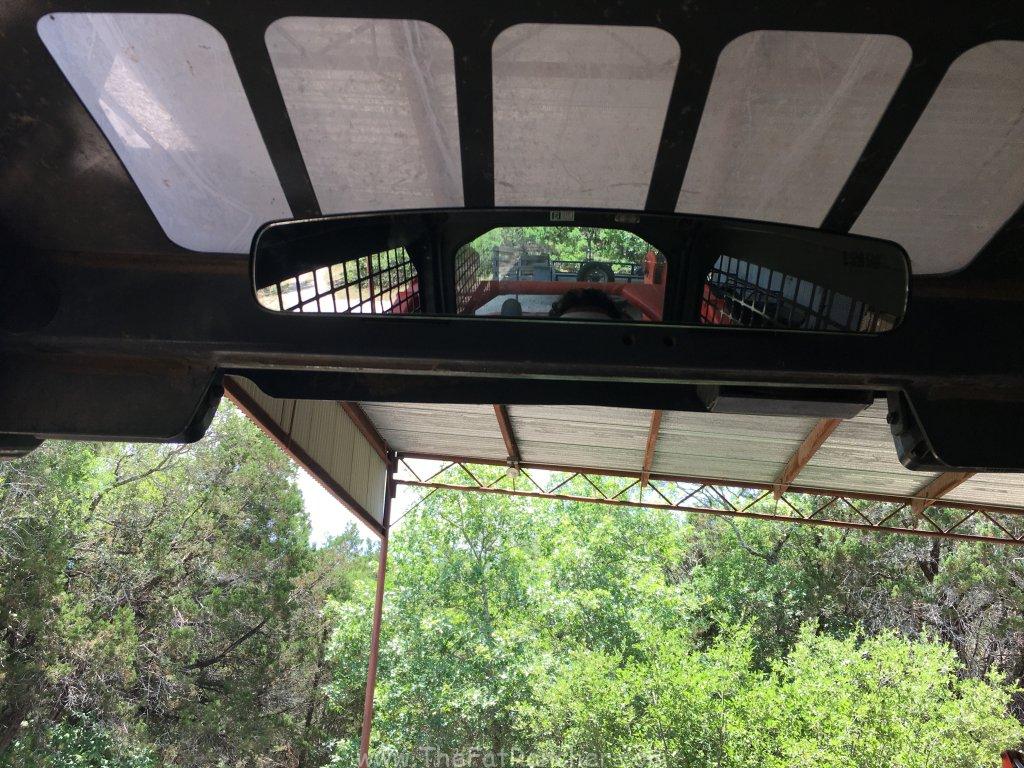
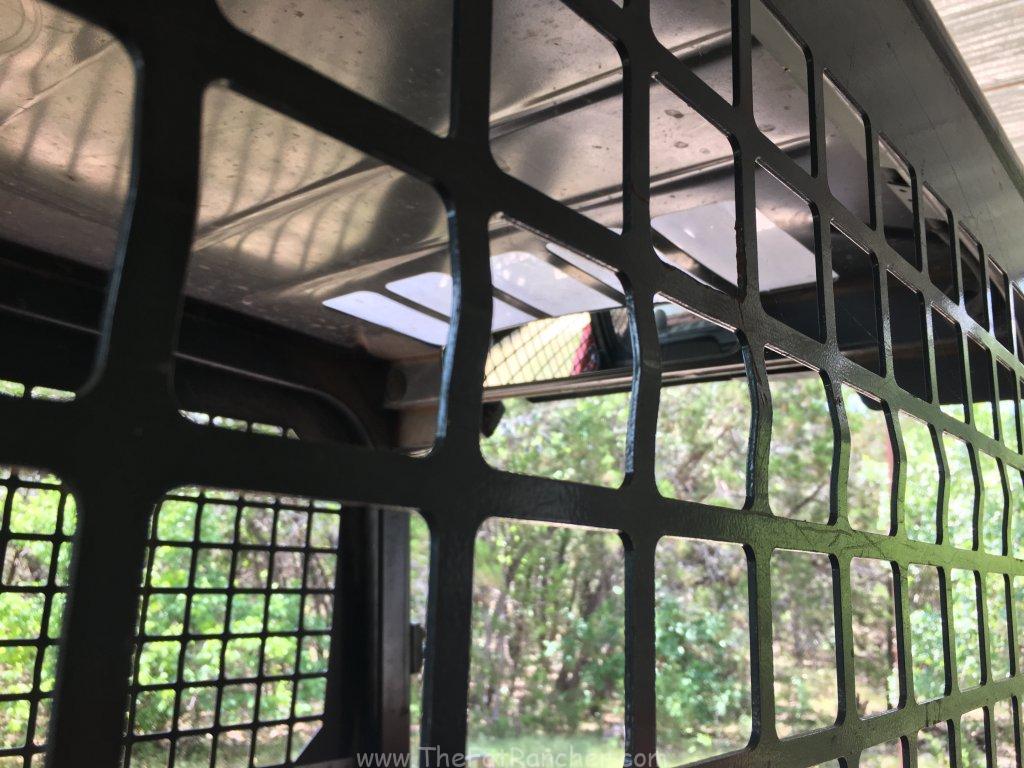
Instead of drilling holes in the Kubota headache bar, I used 3M industrial two sided tape to install the bracket (after cleaning the surfaces with acetone). This actually worked great as the World Mall mirror is light weight and the 3M tape is awesome. Total install time? About 5 minutes.
Now The Fat Rancher can see the terror in peoples eyes as he pirouettes the track loader in reverse!
Lookout behind!
While not as high quality as the Xislet, the World Mall Universal Golf Cart Rear View Mirror works perfectly in this application. The lightweight and wide smooth brackets work perfectly with the double-sided pads for a solid installation.
Now, The Fat Rancher likes to tell his daughter that he has eyes in the back of his head. But we both know that’s not true. He needs every crutch he can get to keep from careening about recklessly. Wreck-it Ralph comes to mind on when on the track loader.
So when TFR scraped the rear view mirror off his Mule last year, visions of replacement mirrors began even before my daughter’s laughter died.
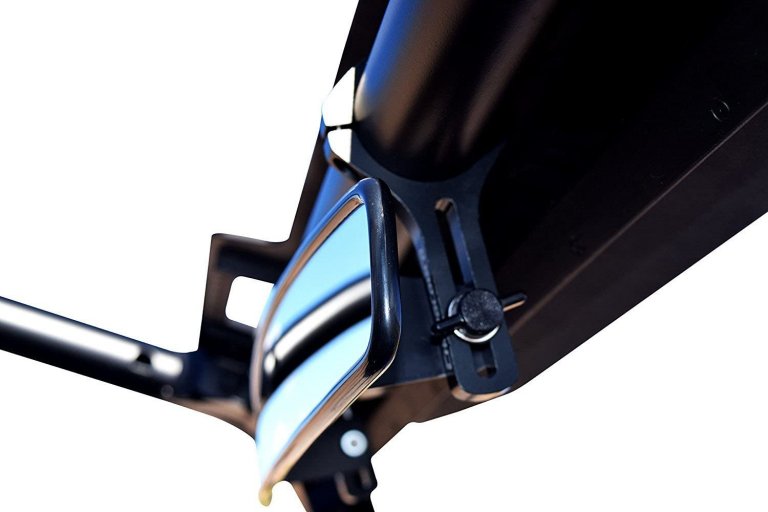
Recently I purchased and installed the Xislet 2020 UTV Rear View Mirror from Amazon to install on our Kawasaki Mule (2009 KAF620P). I can’t say enough about the quality, fit and finish of this product.
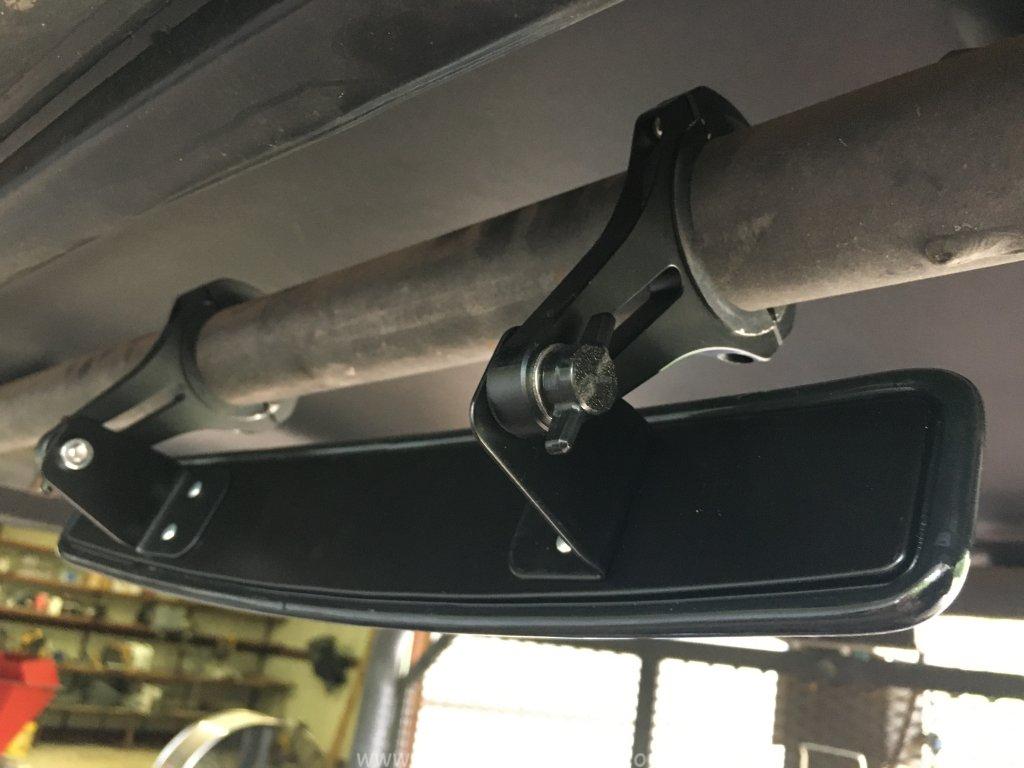
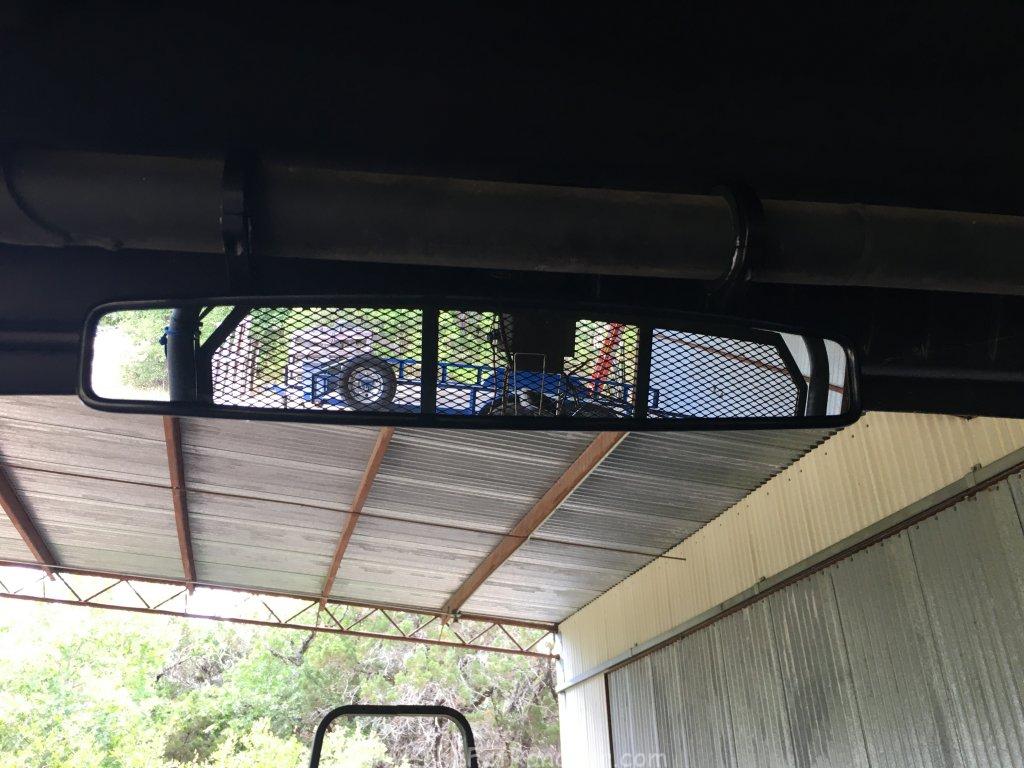
The mirror mounts in a headliner position on the top roll bar with two brackets. This means it won’t need to take much abuse. It’s going to take a lot more to scrape this mirror off the Mule!
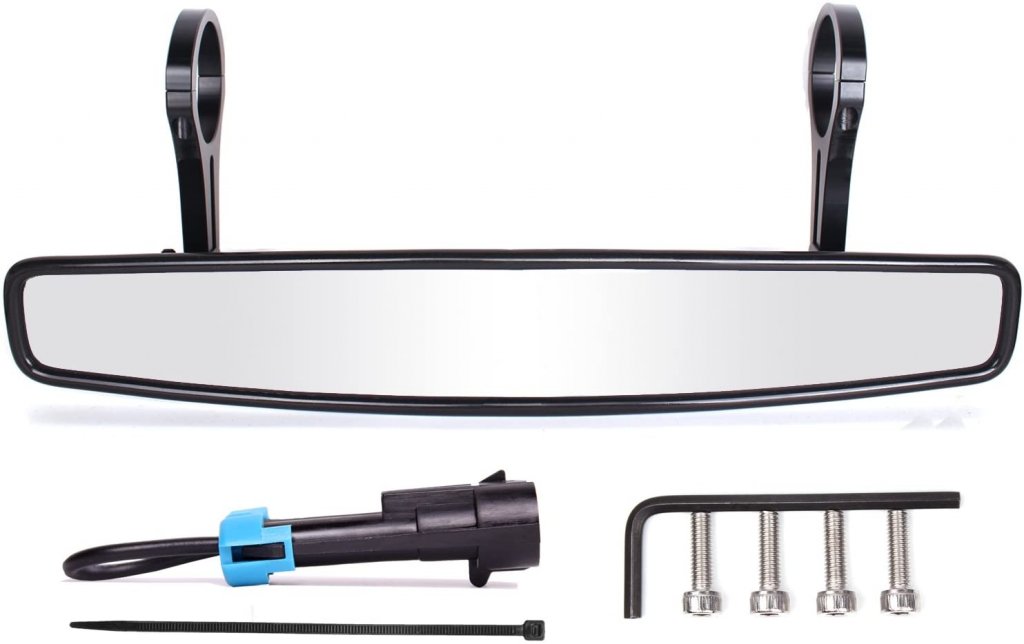
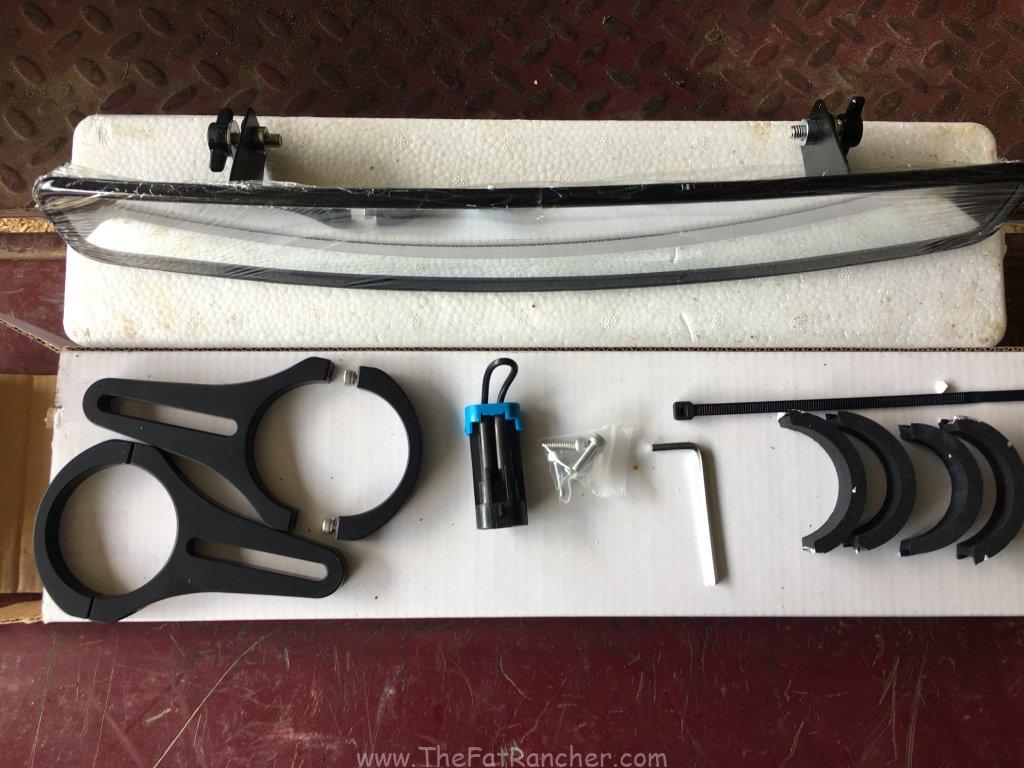
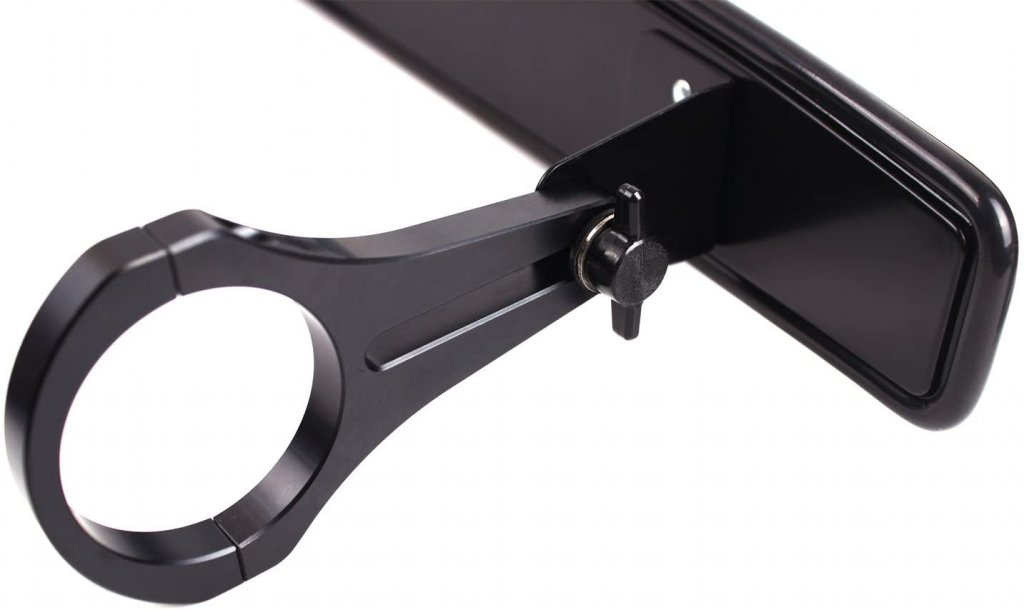
From a construction standpoint, this rear view mirror is top-notch. The brackets are made from machined aluminum, rubber channel insulators and are designed for 1.75″ roll bars (a 2″ model is also available). The thumb screws are oversized and mount with rubber washers to fully secure the aim of the mirror. They even include an Allen wrench for the cap screws.
Everything you need is here. The electrical connector is a seat belt bypass for Polaris. Don’t need that.
The mirror itself is “panoramic.” That is, it is convex for a wider view. The actual rear view mirror made of glass and the housing frame is aluminum alloy.
This model fit perfectly on the Mule roll bar. Note the gaskets on both mounting points to minimize “walk.”The convex shape is great for getting a wide view in back of you.
The Xislet 2020 rear view mirror is outstanding in construction quality and utility. Make sure you order the right version for the size of the roll bar your UTV has.
In another post I’ll show you how I installed a rear view mirror in the track loader.
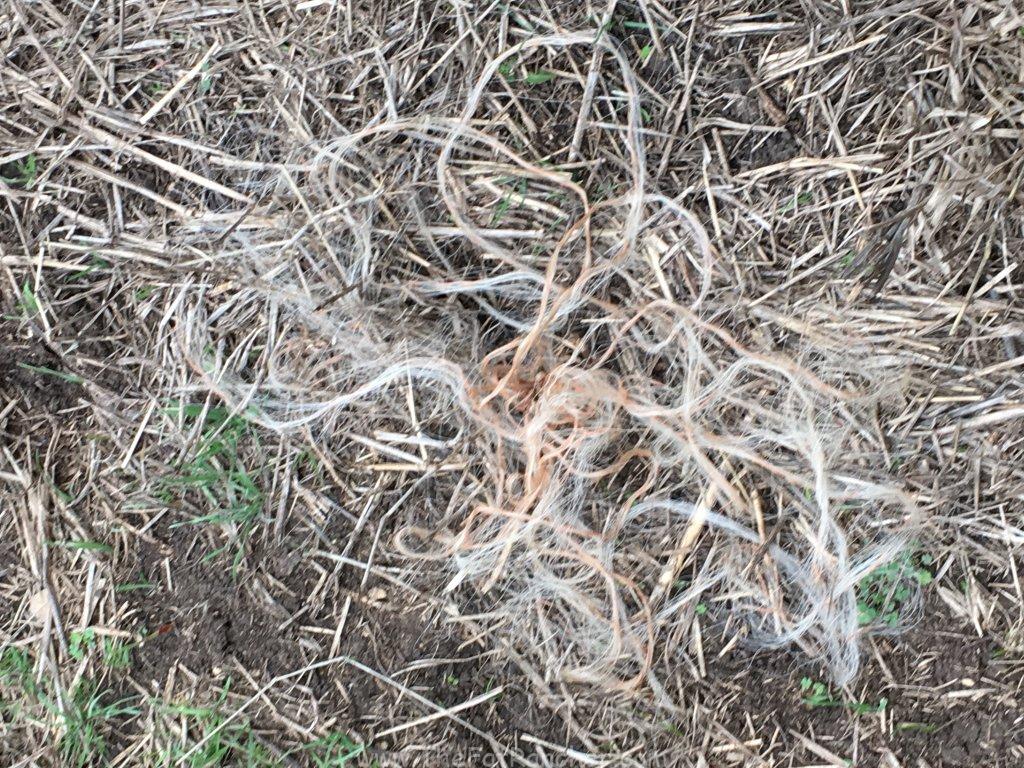
Tractor repair is time-consuming and costly. This sort of flotsam (which you might find in your pasture) will surely aggravate your trusty steed: Poly twine.
This is the twine that is used to keep hay bales bundled up for transport. It is strong and will not disintegrate over our lifetime (maybe several). This particular wad was just the surface of 100 feet or so of twine that the pasture grasses had grown through, making it virtually impossible to pick up without using the tractor bucket and spear.
Some people will move a bale into the pasture and then just run a razor over the twine, leaving the remnants in the field—bad idea.
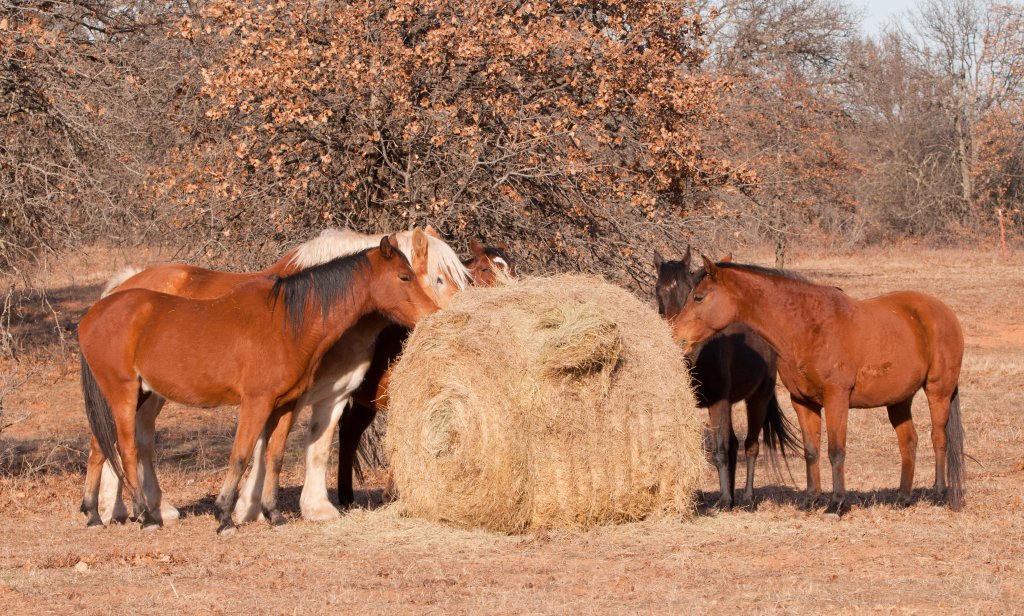
Horses eating hay off a large round bale in winter pasture
Why do You Care?
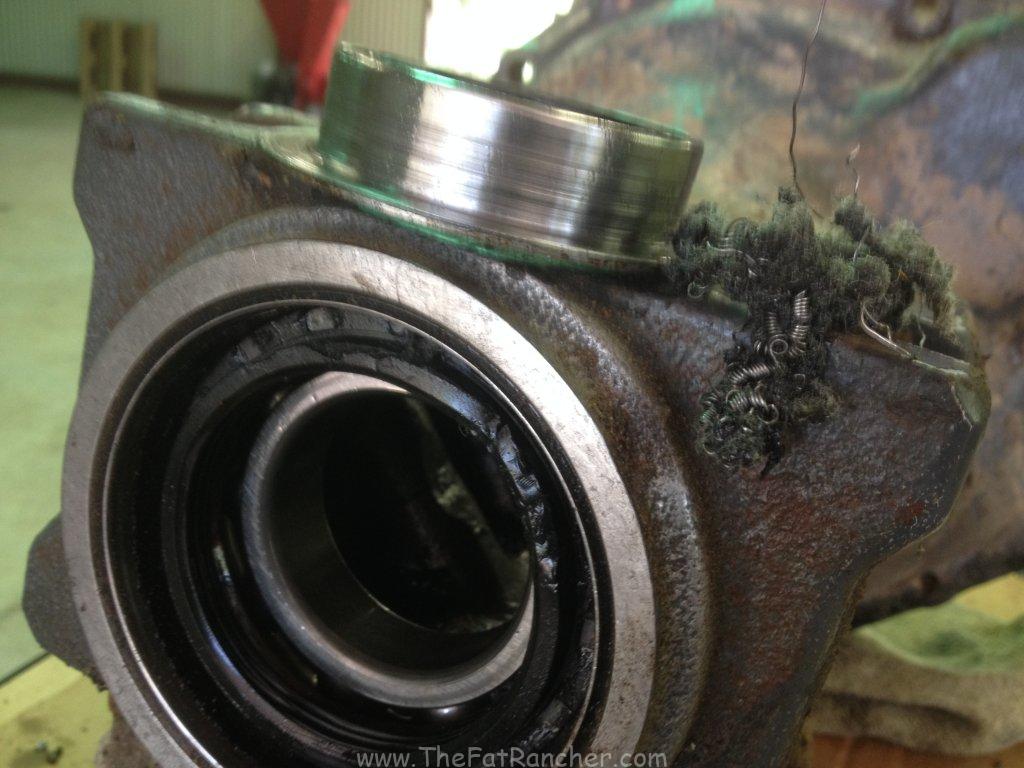
Why do you care? Apart from the fact that it is unnatural and isn’t good for the livestock, it can get wrapped around your tractor’s axle.
There you are, merrily chugging along while foot upon foot is wound around the back of your tire. Since the grasses grow through this twine mat, a lot of pressure is applied to this filament that doesn’t like to break.
At some point the twine gets under the bearing seal and this is the result:
Once a foreign object gets between the axle and the bearing seal, full failure isn’t far behind.
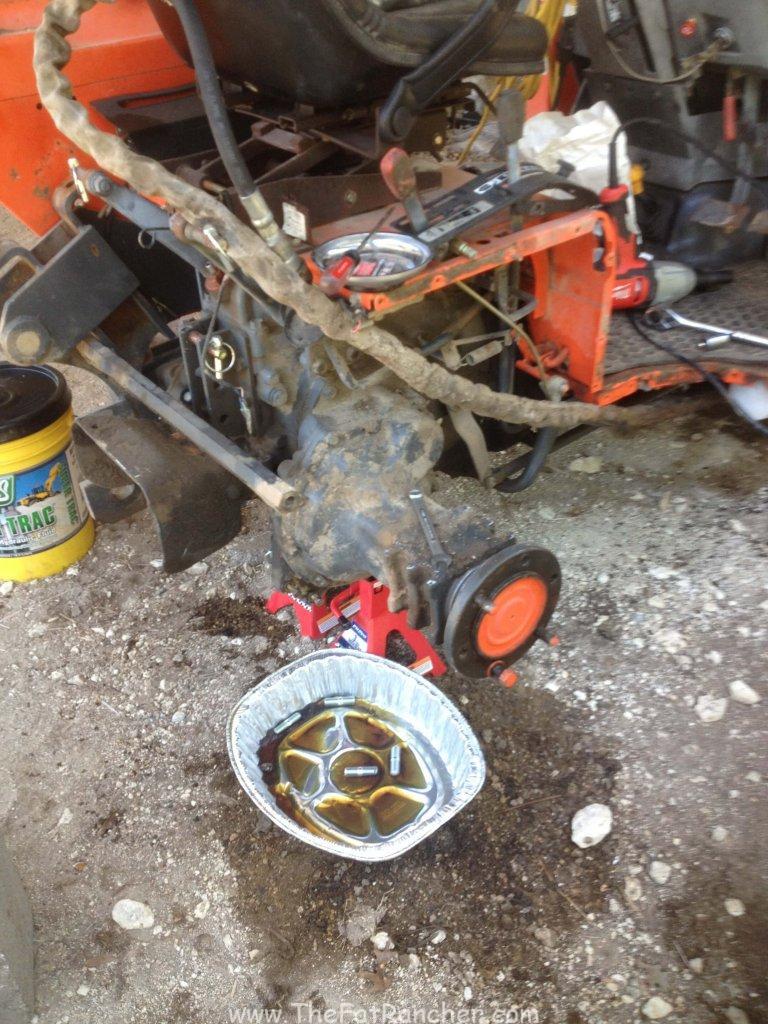
This is particularly ugly in tractors, as they have a “wet” axle and transmission line. That is, everything runs in a hydraulic fluid bath. Once this seal goes out, all that hydraulic fluid starts running. And there is a lot of it, in the case of my Kubota L35, over 40 quarts. You won’t lose all of it. But you will lose a lot, and it’s a mess.
Replacing these seals are particularly onerous. First, you must remove the rear side tractor chassis structure. Then you have to crack the transfer case and remove the outer housing. Next, you have to remove a staked nut holding the main gear on the axle so you can pull the axle out. Finally, you must pry the seal off its respective surfaces. Oof.
This is the rear axle housing.
Reassembling is pretty straightforward, with the exception of sealing the transfer case. Take care to clean the mating surfaces off and use a high quality, petroleum compatible sealant. Nobody wants to have to redo this just to fix a leak.
The moral of this story? There are no shortcuts. Pick up your trash at the time of creation. “A stitch in time saves nine!”
Fall at The Fat Rancher’s place brings many changes to the hobby ranch.
Many of the songbirds and hummingbirds migrate and we await the return of the American Robin which usually grace our ranch during the winter.
A respite on a twig
The tarantulas start moving around looking for love.
Looking for love in all the wrong places!
“For a short time in the spring (and to some extent in the fall), usually after a rain, male Texas brown tarantulas (Aphonopelma hentzi complex) leave their burrows and hidey-holes in search of–what else?–romance. In some parts of the state dozens of spiders may be seen at once, especially at night along lonely west Texas highways.” (Mike Merchant TAMU)
The Deer get randy, and the predators get restless.
Deer and turkey at the feeder
On the prowl…
“While other native wild cat species are struggling to survive in Texas, the bobcat’s secretive nature, highly developed physical capabilities, and ability to adapt to changing conditions have allowed it to thrive. It can be found throughout the state and is especially abundant in the South Texas brush country. However, its shy nature and the fact that it is most active at night keep it from being seen by most people. One way to tell if a bobcat is in the area is by the scratches on tree trunks where the cat sharpens its claws and the climbing scratches on frequently used lookout trees.” (From Texas Parks and Wildlife)
Coyote ranging in pasture.
And the cows are feeding on the hay newly regrown by fall rains.
Many use the terms farm and ranch interchangeably. However, there are subtle differences. Diana Eastman has a great article on just this subject on land.com.
Both Farms and Ranches are typically comprised of large blocks of agricultural land. However, “large” is relative. Here in the Silicon Hills of Central Texas, 50 acres might be considered large. Particularly if you come from the postage stamp property of the city.
The Fat Rancher prefers to think of his little slice of heaven as a “ranchette.” While that doesn’t sound too manly, it’s a pretty good description of our 47 acre spread.
According to Ms. Eastman, all ranches are farms. And these farms may have a focus upon one plant or animal. Still, the farm may have a variety of other animals to enhance profitability or supply the ranch (think goats, chickens, pigs).
Pre-cultivation photo of The Fat Rancher’s back pasture. This year we were blessed with ample rain to fill the tank.
A ranch typically a farm that focuses upon animals like grazing livestock. The Fat Rancher is rehabbing his spread to raise Wagyu beef. While these renovations are in process, the pastures are cultivated with Hay Grazer and leased out to other ranchers.
Passive Investment?
As Ms. Eastman notes, ranches and farms are not passive investments. The Fat Rancher can attest to the constant work “guiding” nature in the right direction: Clearing Junipers so that the Live Oak can prosper during this drought; Repairing and rehabbing fences.
Hay Grazer coming up at about a month.
Whether you call it a farm or ranch. The Fat Rancher likes to think of it as a exercise in exercise. Though he won’t be changing his moniker anytime soon. And he does admit to a certain relaxation that comes with tractoring back and forth for hours listening to Rush and Disturbed, with a little Lone Star mixed in.
Looking out over a growing field is quite rewarding to this technology refugee.