
Home Blog Page 2

Choosing a Homestead Property

Choosing a homestead property can be frustrating. Last night I turned to my wife and exclaimed, “Looking for a new place to call home must be one of the most soul-sucking activities in modern times.” I was, of course, referring to our latest endeavor to find a new place to homestead.

“Thousands of tired, nerve-shaken, over-civilized people are beginning to find out that going to the mountains is going home; that wildness is a necessity”

John Muir

Nearly eight years ago, my wife and I made the decision to leave the technopolis of Austin, Texas, and move out to the country. We had found we had less and less in common with the people who were moving into our neighborhood but had rediscovered rural America during our RV adventures.

The thought was to leave the nuttiness that our city was becoming and find a place that spoke to our renewed interest in independent living and traditional American values of rugged individualism. The Lord provides, and we discovered a small town within a half-hour of Austin where acreage and small-town living were still affordable.

Photo of Starbucks sign.
The beginning of the end?

Fast forward eight years and the city has followed us home. The growth in Austin has meant that the city is bursting at its seams, and the population is squirting out every road leading out of the city.

When we moved out here we were planning on living here through retirement, living at a slower pace. Now we contend with city traffic, increasing crime, and an exploding tax bill. Our rural property isn’t so rural now.

Once they built a Starbucks out here, we decided that it was time to move on.

That’s when we set up an account on Lands of America.

Location, location, location…

The first big decision when choosing a homestead property is where you want to live. This is a complex question that can only be answered by taking an inventory of what is important to you:

  • Medical services (hospitals, specialists, labs)
  • Communications (cell phone, internet, etc.)
  • Retail services
  • Emergency services (fire, ambulance, police)
  • Access to a Costco (OK. This a personal preference!)

What color is your parachute?

Outside of the convenience aspect of day-to-day living, there are cultural aspects to consider. Moreover, rural towns take on the patina of the people who live and work there.

There are many small towns in Texas that are tourist destinations. During the week, there is little activity. But come the weekend, there are no parking spaces to be found. While there may be a plethora of cafes and restaurants, there might be a dearth of skilled trades available.

Some towns are built around retirement communities. While medical services may be in abundance, night-life and family activities may be in short supply.

River view? I don’t think so…

The taffy pull for my wife and me is “how rural” we want to be. I’m keen on an asphalt road at least until the last mile. My wife wants to be confident that we are not encroached upon by a city again. We both agree that some neighbors are necessary so that she doesn’t feel isolated when I am not home.

As a compromise, we are looking at towns within an hour or two of San Antonio. San Antonio has an abundance of cultural activities, a thriving hospital system, and several major highways to gain access.

Ranch Neighbors

In our city days, we were concerned if we could touch the neighbor’s house by sticking an arm out the window. In choosing a homestead property, our mindset has changed. Now we consider neighbors’ farm “close” if they are within a mile. That said, a mile is only 5,280 feet. And that might be too close if the neighbor raises pork for a living.


The collector next door!
Junkyard or art installation? You be the judge!

So, neighbors are important, even out in the country.

Are you a collector? Some folks love the county so they can do their own thing without the city bothering them. That might mean that they “collect” for a hobby. Used cars, shipping containers, old boats. Some folks just can’t pass up a good deal!

How about you? Is it going to rub you the wrong way to drive by Fibber McGee’s project yard every time you drive out to your “spread?”

Another example of knowing who your future neighbor is going to be: Our home was just across the railroad tracks from a side business one of our neighbors owned. That side business grew from a hobby to pay the property taxes into the busiest shooting range near Austin. What started out as the occasional crack of a hunter sighting in his rifle to a steady barrage of semi-auto (and full auto!) cannonade six days a week. Literally, I would look forward to Mondays when I could drive out into our back pasture and enjoy the peace and quiet.

Don’t get me wrong, I like to shoot on the ranch! But when they set up a 50 caliber machine gun and started selling tickets, we felt as though we were next door to Quantico.

So picking your neighbors carefully is a good idea in the country too. If you are lucky, you will find an affordably sized spread that has large neighbors. That way, you have fewer neighbors to “worry about” and less chance that a bad actor will move in. That is, of course, unless your large landowner decides to subdivide into ranchettes. Then all bets are off.

Next up: Ranch Features to Watch For

Redneck Hack No. 2: Separating the Chaff

I shred, therefore I am.

The Fat Rancher derives huge sense of self-worth shredding the back pasture.

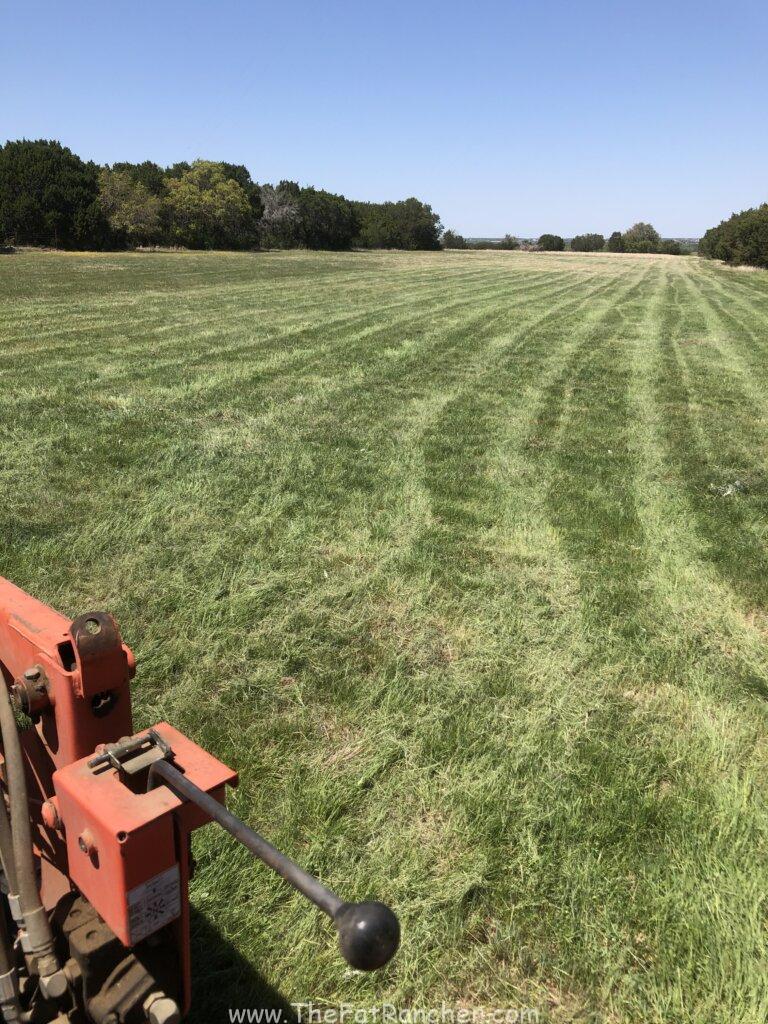
Nothing satisfies like hours bumping along obliterating the brown stuff, leaving fresh green nubs with an even pattern in your wake.

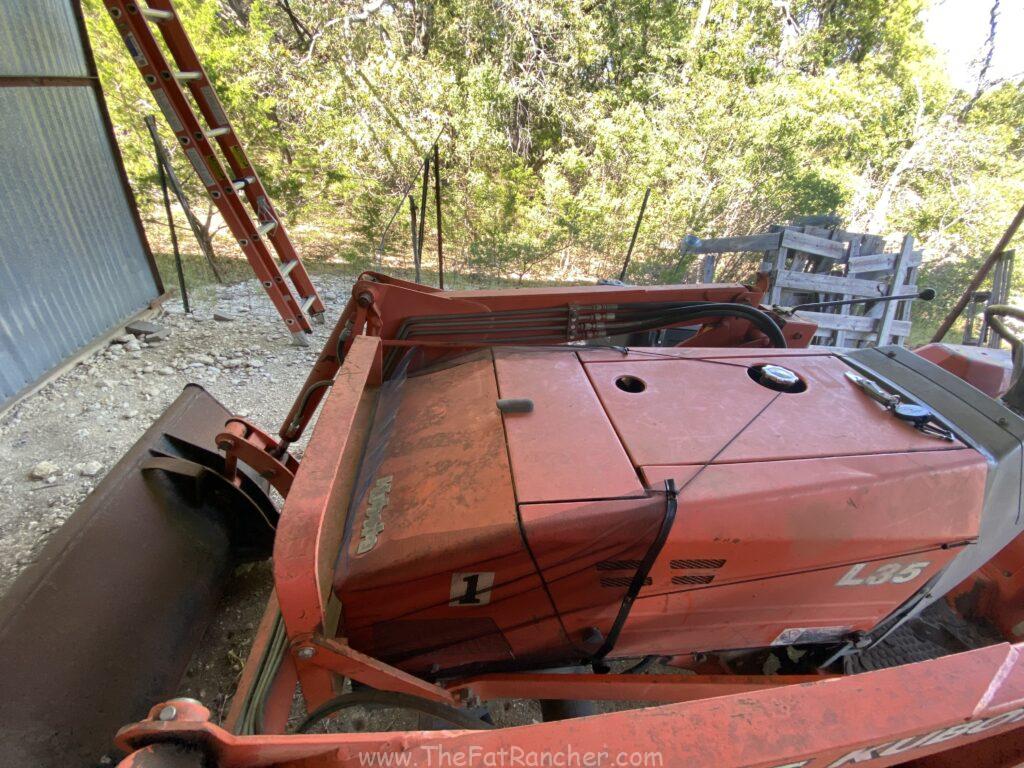
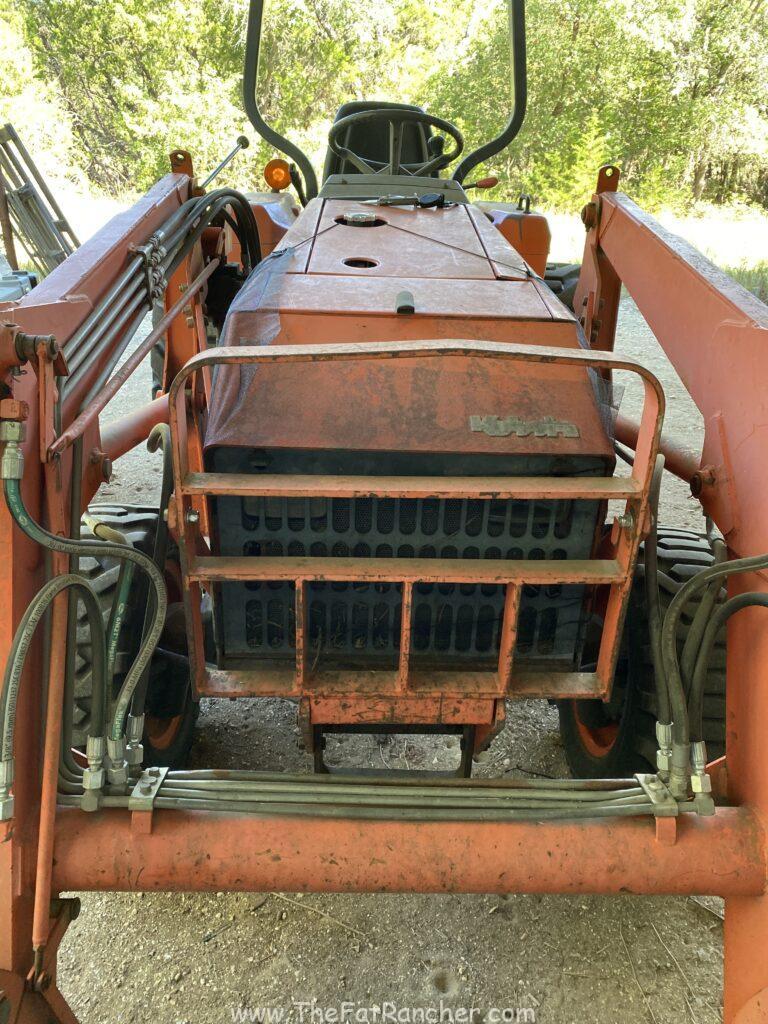
Often the challenge is the repeated tractor maintenance which interrupts the shredding session. In particular, my rickety old Kubota L35 is prone to overheating. This is primarily due to air restriction due to contamination from grass chaff.

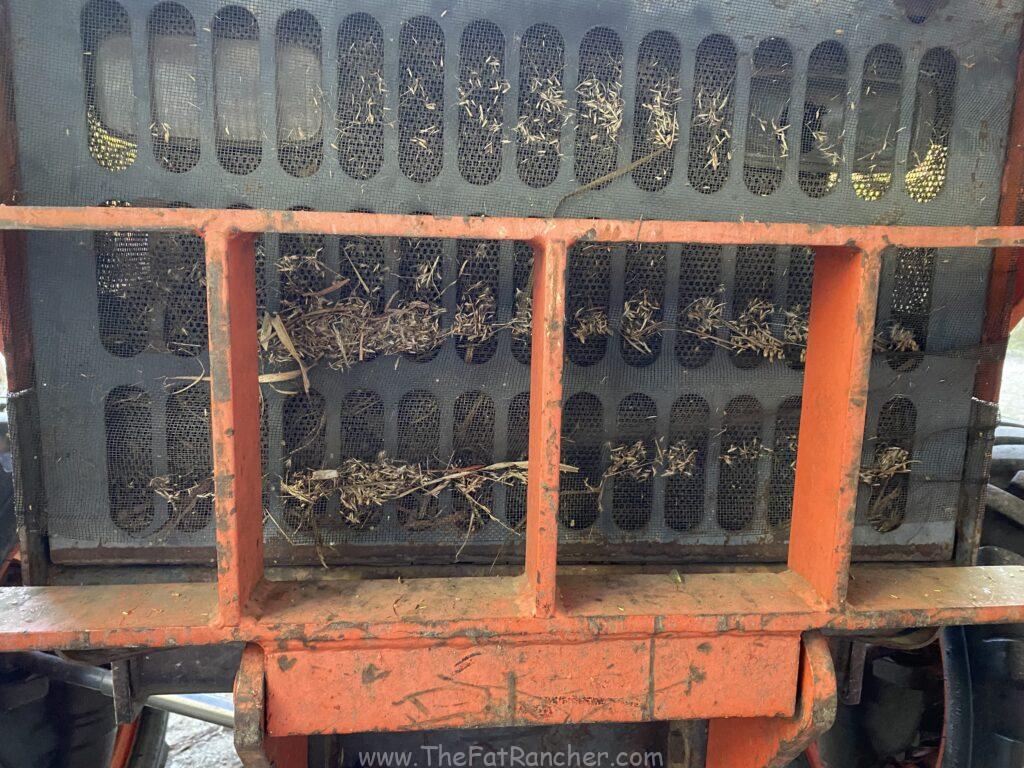
Tractor radiator grille

The Solution

I think I’ve found a solution to the time-consuming disassembly by using an inexpensive “bug screen” available from Amazon for ~$13.

Side view of the bug screen installed
Does it look hokey? Oh yeah!

Using the included bungee cords and “S” hooks, I covered the cowling inlet with this fine screen to catch the dried grass and chaff before it reached the grill.

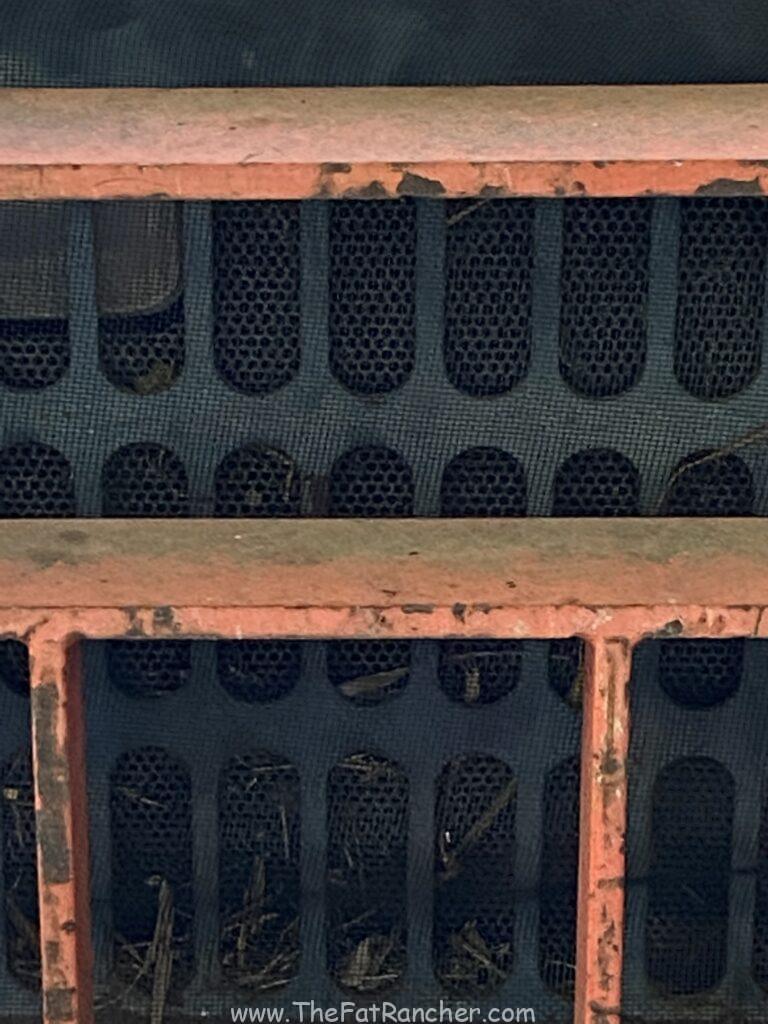
The result is that I can dismount and “snap” the screen a few times to rid that pesky chaff then remount and get on with it! No disassembly is required.

Bug screen capturing dried grass and chaff

Pasture after shredding

The L35 has two layers of protection from debris. First, in front of the radiator, a grill which, while protecting from rocks and hard debris, does little more than clog with seed pods and dried grass.

Next, there is a radiator screen which is conveniently removable via a flip-open hatch at the front of the bonnet.

The grill is problematic as the crash grill has to be unbolted to detach the debris grill. This involves two wrenches.

While the radiator screen is easy enough to remove, it covers only the radiator, but not the oil cooler which is located in front of it.

Removable mesh over radiator inlet

So there is your $15 solution to crud in your radiator!

The latest hack brought to you by The Fat Rancher!

Buying Your First Ranch Power Equipment

1

The Fat Rancher has long lived by the credo “Better living through power tools!” Nowhere is this better demonstrated than choosing the heavy equipment for your ranch.

Every young person at one time or another dreams of extending their might via heavy equipment. Otherwise, why would there be so many toy tractors, dump trucks, and the like in the toy aisle? Realistically, power equipment extends the land manager’s reach by leveraging his or her skills through the magic of hydraulic power.

It is easy to get carried away with the selection of your first power equipment. But a similar risk exists in being too modest in your needs. Careful consideration of your immediate tasks along, with those that will crop up later, is a must to maximize your purchase.

Warning: Power Equipment may bite you in the ass if you aren’t mindful of its use. More than one weekend warrior has been maimed or killed by properly functioning power equipment carelessly used. Read the manual, never bypass safety features and always use protective equipment.

Consideration #1: Power and Weight of Your Power Equipment

I bought my first tractor used at Auction. Bad choice, but that’s a topic for another time. I purchased a Kubota L35 that included a backhoe in addition to the bucket loader. I figured that it would do whatever this city boy needed. After all, it had both a bucket and a backhoe, right?

The first time I tried to lift a round bale of hay, I learned two lessons: First, there is no substitute for lifting power and second, you better understand ballast. My tractor was not powerful enough to lift a round bale. Further, it was too light to keep all four wheels on the ground. While there wasn’t enough power to lift the bale, there was ample power to lift the rear wheels off the ground. As experienced operators know, this unbalanced condition makes tip-over of the 5,000-pound piece of equipment a very real possibility.

Think carefully about what you are going to do with your power equipment. There is nothing more frustrating than investing in a tool and then finding out it isn’t sufficient for your job. Note that many well-produced product demo videos are shot with sandy loam dirt. That makes a lot of land work look easy. In Texas, we don’t have much of that and rocky soil is a different kettle of fish. All bets are off when you start working with Fairlie clay and limestone rock.

Renting is a good way to get an idea of a product’s capabilities before you buy. Ask the salesman where to rent a similar model prior to buying it. Spending $500 on a weekend rental will be money well spent if you find product limitations prior to buying the unit. Are there no companies renting this equipment? Take into consideration why that might be.

Consideration #2: Flexibility in Attachments

Skid steer with quick attach bucket
Quick attach brackets allow for rapid changing of implements.

My tractor was built before skid steer quick attach mounts were common for the bucket. So when I figured out that bucket attachments (various attachments that clamp to the bucket) can’t do everything, I was out of luck.

Skid Steer quick attach tools are made by literally everyone and their mother. You can buy cheap and light, expensive and heavy-duty, Chinese or American, flexible function or specific. They all use the same mount and (essentially) the same hydraulic interface. If you buy a bespoke machine, you will be limited to the manufacturer’s tools and prices.

Check out the Universal Fast Hitch for three point changes here.

Consideration #3: The Swiss Army Knife Option

We’ve all seen them: Marvels of modern ingenuity that slice, dice, spindle, and fold all in a single convertible product. The product videos are a marvel. “Watch an operator build an entire pool without leaving the seat of the Omnitractor 5000!” In reality, most of these products do many things, none of them professional-grade. There is a reason pros use specialized heavy equipment: They are optimized for a specific task at pro specs and speed.

So The Fat Rancher casts a jaundiced eye on power equipment that purports to be overly flexible. If your situation is an ultra-light duty, one of these might be just what you need. But I would bet that most hobby farmers are better off with buying a product designed for the tasks they perform weekly and then renting for specialized jobs.

The happy medium, of course, may be the tractor with the skid-steer quick attach and auxiliary hydraulics. However, even if you buy a good quality post-hole digger, you may find you don’t have enough front-end weight to drill in rocky soil. Similarly, you won’t have the maneuverability needed for a brush hog or trencher attachment.

Consideration #4: Four Wheel Drive

Yeah, you can save a few thousand dollars by foregoing the four-wheel-drive option. Don’t.

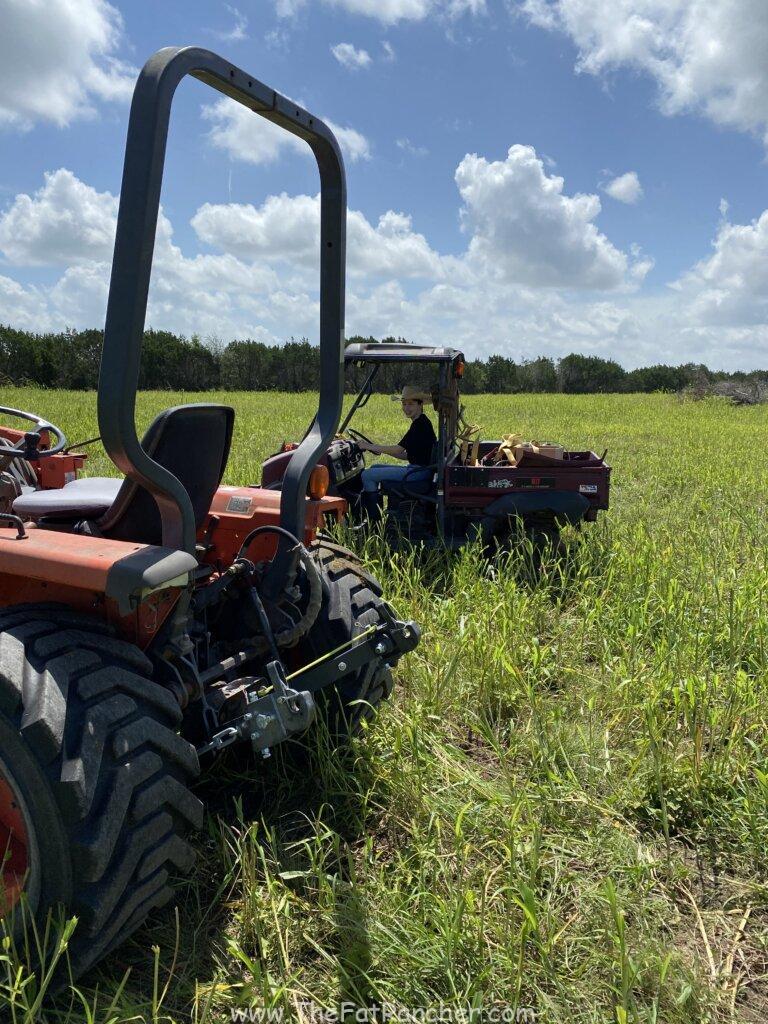
Tractor and UTV in field
“I’m driving it back so you don’t get it stuck again!”

Reason 1: Unless you live in the desert, you are going to encounter clay and mud. The first time you have to muck home in your socks because your equipment is stuck (and your boots came off too!), you’ll be regretting your miserly tendencies. More than once The Fat Rancher’s daughter has had to fetch her cheap dad in the tractor when he ventured too close to the tank in the two-wheel-drive UTV. “Dad! Again?!”

Besides, deserts have sand. Sand is as bad as clay.

Reason 2: Four-wheel-drive gives you more torque for towing. This is especially valuable when tine-plowing.

Consideration #4: Serviceability

Always consider the serviceability of the ranch power equipment you are buying. Make sure that there is warranty service available locally with an option for “mobile mechanic.” You should have an alternative to trailering the equipment back to the dealer if there is a warranty repair or service bulletin requirement.

My tractor is a heartbreaker. It’s old and was ” ‘rode hard and put up wet” by the first owner. I’ve spent plenty fixing this and replacing that. It is frustrating when you get ready to do some work and the darn thing is broken.

You want parts nearby and technicians to handle the tasks you aren’t comfortable with. Extra points if the local dealer is willing to support you as weekend mechanic. The farm equipment folks understand that owners will make many repairs themselves due to limitations in time, money, and mobility of the equipment. They make money off the parts and often will support user repairs that aren’t too consuming.

Summary

Ranch power equipment, while not essential, makes operating the hobby ranch or farm much more productive.

Careful evaluation of your specific needs will leverage your investment of time and money.

Organize Your Stash (of tools)

The Fat Rancher recognizes that having the right doodads at the right time is key to land management nirvana. Tool organization seems a challenge at some times.

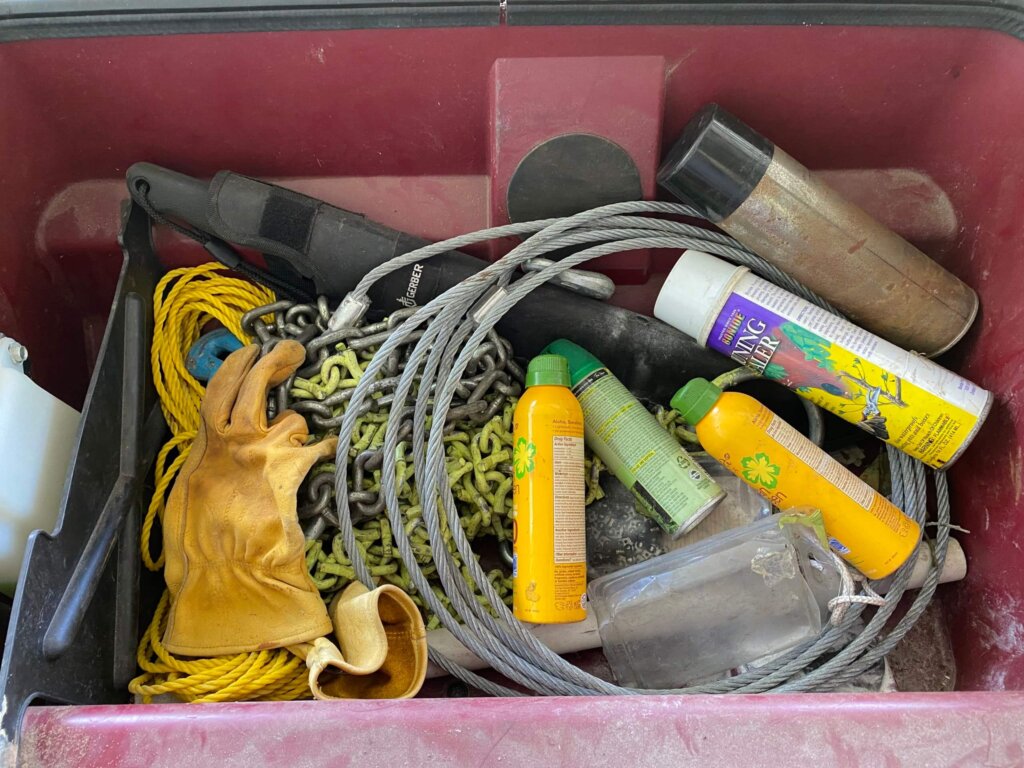
For example, in my UTV I keep a grubbing chain, tow cable, and ropes. But I never know when I might need to wrestle juniper around the ranch or pull the UTV out of the mud (I should have bought 4WD!).

Tools in UTV frunk
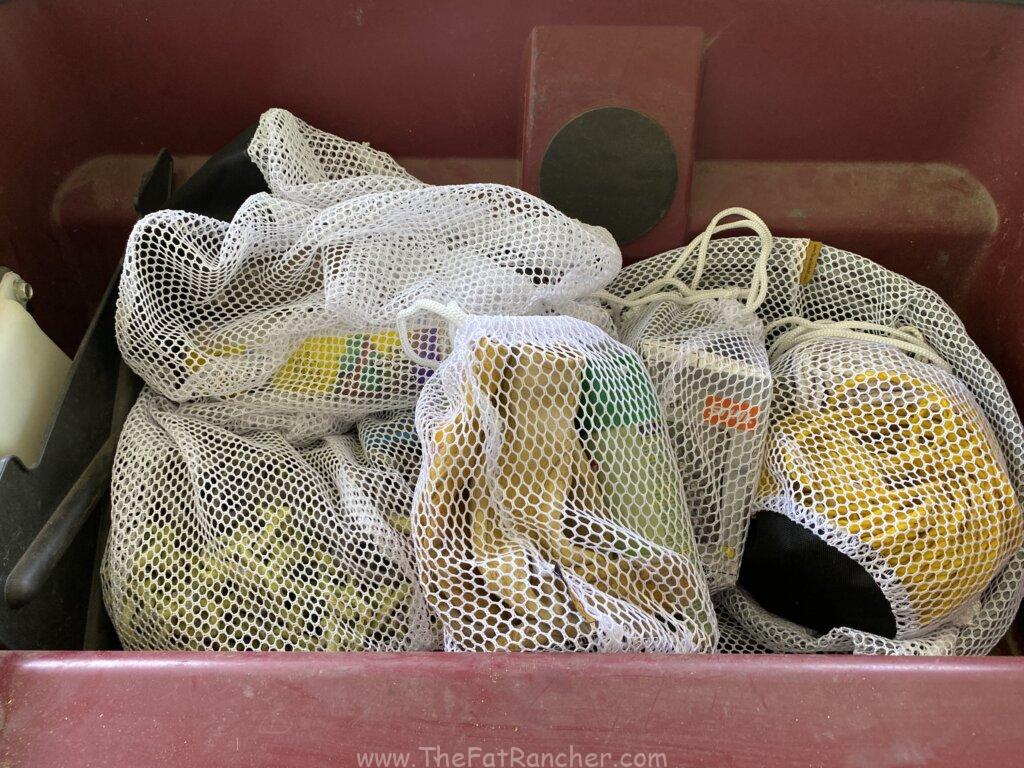
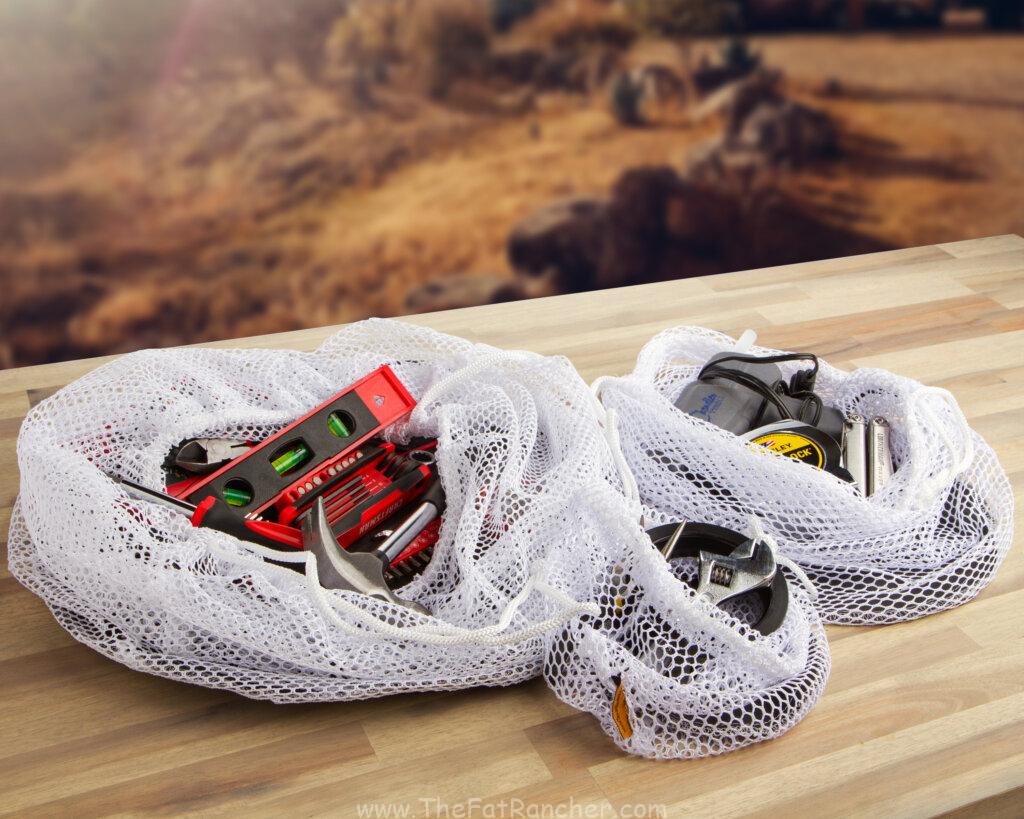
Tools organized in bags.

To keep these sundries organized in the frunk, I use the Bubba Duffle. Now, this is a shameless plug, as I commissioned the fabrication of these fine net bags myself to sell on Texas Redoubt. At the time, I just could not find an equivalent organizer for these ranch essentials.

The mesh fabric serves two purposes: First, it allows easy identification of the tools enclosed. Second, it avoids the trapping of fine dirt that typically accumulates in solid bags.

Photo of Texas Redoubt's Bubba Duffle bags to organize tools and accessories.

Mesh sides and a solid bottom enhance identification of the contents.

The Bubba Duffle is sold in a set of three bags for your tool organization pleasure: Large, medium, and small.

The Bubba Duffle is available at Amazon or on the Texas Redoubt website.

Our Giveaway Winners

Texas Redoubt would like to congratulate our three giveaway winners!

Congratulations to Jennifer and Rebecca for each winning a Texas Redoubt SF-1 solar floodlight!

Universal Fast Hitch

Whoever designed the three-point hitch knew how to make life miserable. The Universal Fast Hitch by Field Tuff makes the chore of attaching implements a little bit more palatable.

The three-point hitch system is designed to securely tow implements behind the tractor. As importantly, the three-point system permits the implement to be adjusted (or lifted) during operation, which is necessary on the changing terrain of the pasture.

The original design is frustrating as there is limited movement in the hitch arms, and the attach points are pins affixed to the implements. So the procedure goes like this: Back up, reposition, back up, reposition, back up, dismount, lever implement left, beat lift arm onto pin, lock, move to other side, lever implement, beat lift arm onto pin, lock, attach top link.

What it is

Needless to say, The Fat Rancher doesn’t look forward to all the man-handling necessary to align the implement and lock it in place. Fortunately, the smarter bunch developed the fast hitch.

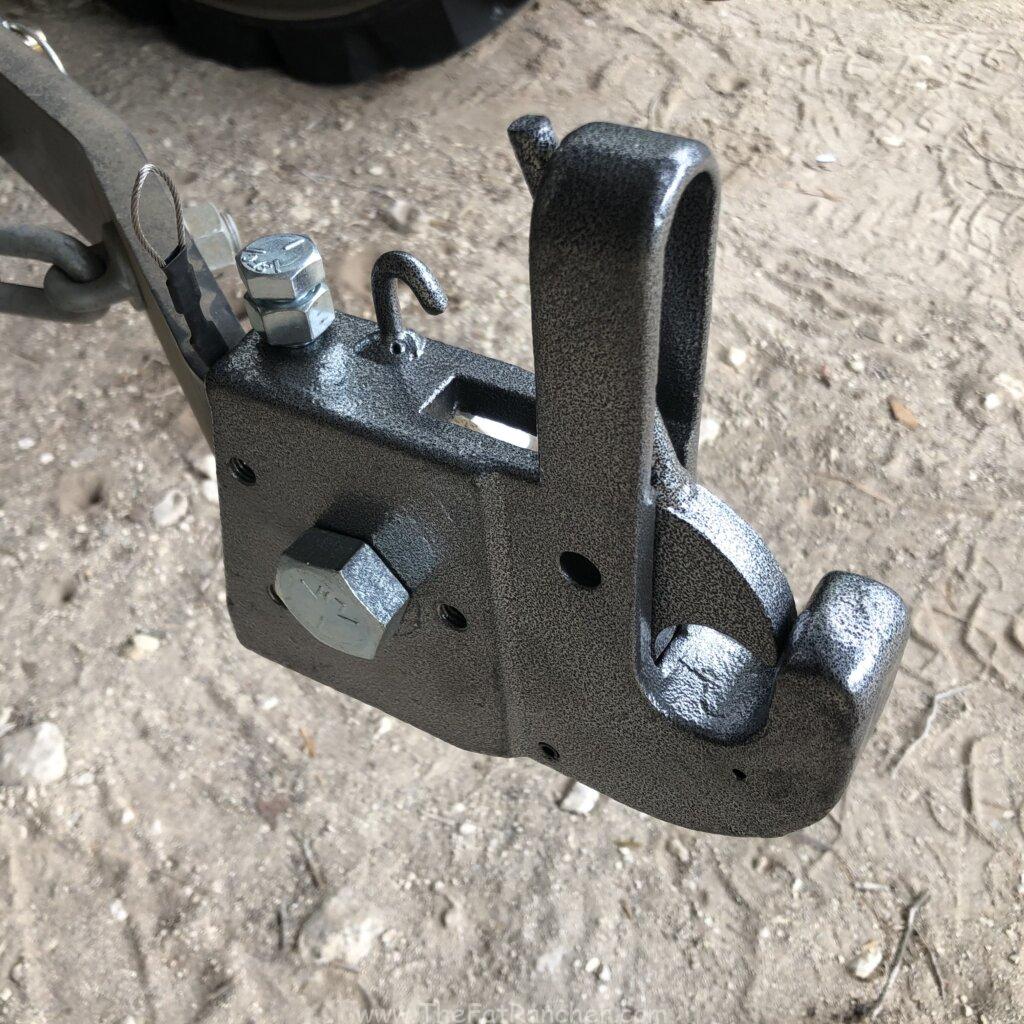
The quick hitch concept is to replace the pivoting pin receivers on the ends of the lift arms with hooks that open vertically.

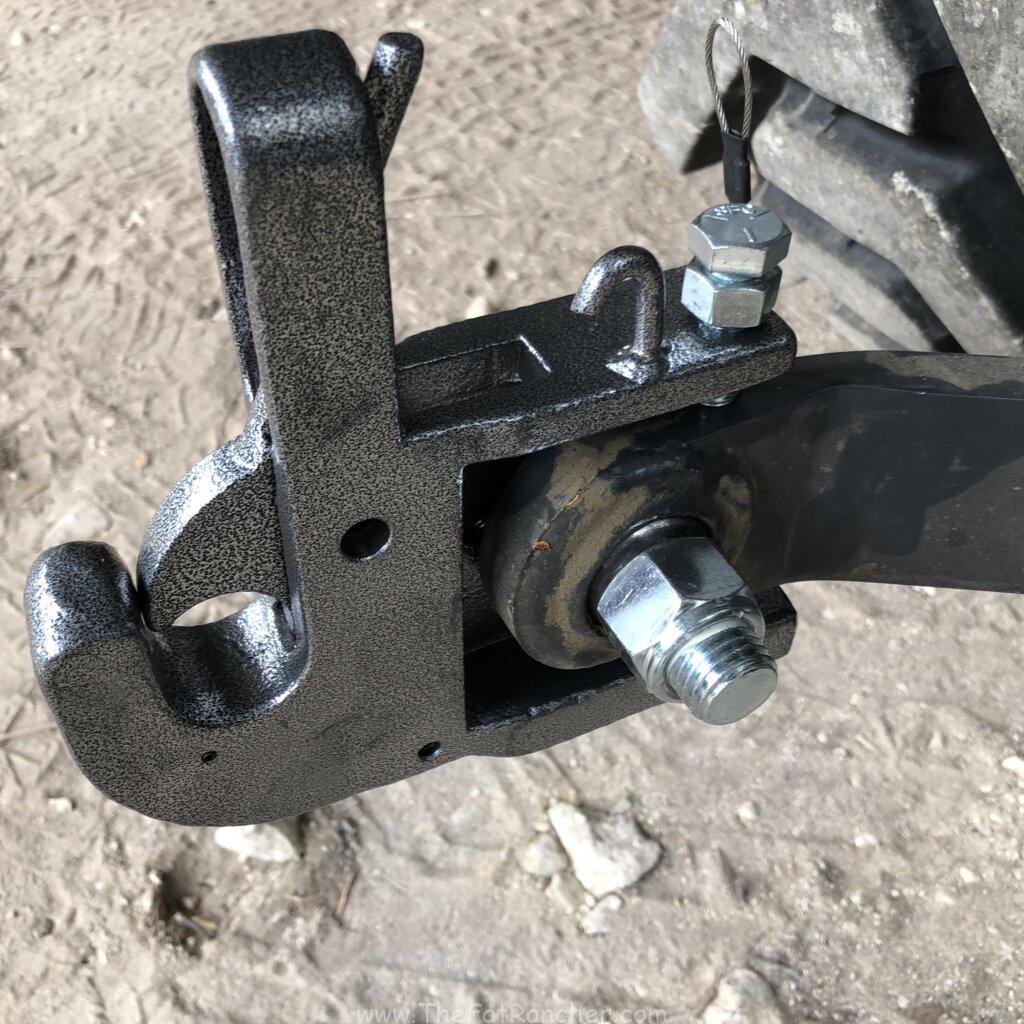
Fast hitch fastened to lift arm
The fast hitch permanently mounts to the pivoting pin receiver.

Using a 7/8″ bolt to carry the weight, smaller bolts are used to position the hitch horizontally and vertically.

A rubber bungee keeps the lift arms together to ease connection to the implement.
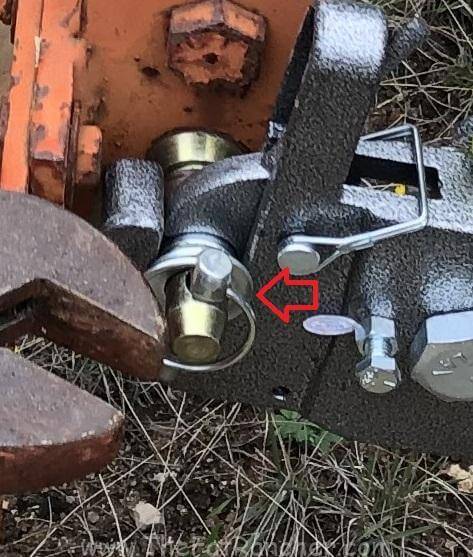
The fast hitch in use. Yes, that’s a mean crescent wrench. Don’t you have one? It’s The Fat Rancher’s prized acquisition.
The hitch is held in place by a massive 7/8″ bolt and positioned by 3/8″ bolts threaded into the sides.

The idea is to back up to the implement with the lift arms lowered so that the implement pins hit the “backstops,” then the operator can raise the lift arm on to the pins.

In practice, the geometry of the top spring locks don’t really facilitate the toggle locks moving back as the arms are raised. That means that you have to position the tractor and arms, dismount, and hold the toggle locks open while you nudge the arms up. Definitely not what the tractor manufacturer had in mind (safety-wise), but pretty much necessary with any fastening method.

Once the hitch is in place, locking pins are used to insure that the retaining latches don’t disengage in operation.

The Kit

The hitch kit comes with all hardware to get the parts installed. Nylon locking nuts are provided for the main lift bolts, and jam nuts are provided for the positioning bolts. The bungee and two lock pins are also included. Field Tuff includes two sets of sleeves for your Cat 1 implement pins as the Universal Fast Hitch is sized for Cat 2 pins. Cat 2 to 1 pins are available at Tractor Supply which would remove the need for the sleeves which add needless complexity.

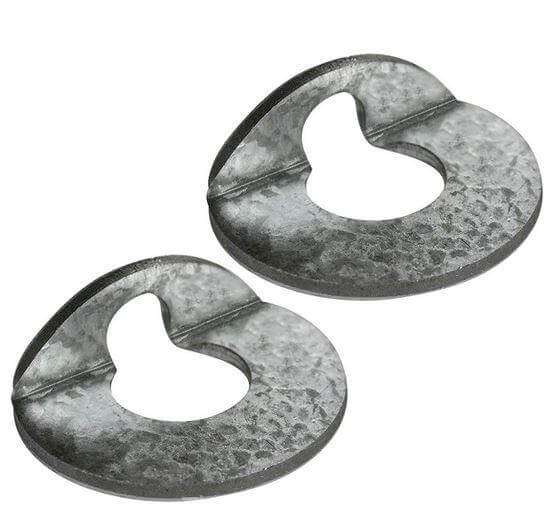
Field Tuff includes two washers to help retain the fast hitch mounts on the implement pins. However, these flat washers aren’t really that effective.

Turns out, there are specialty “bent washers” available which do a much better job. So I have ordered several of these (they are stupid expensive at $5 a set) as I expect them to make the Fast Hitch, er, faster.

While the Field Tuff Universal Fast Hitch System does the job, there appears to be a better-engineered product from a company called Pat’s. The Field Tuff product was available off-the-shelf at Tractor Supply and The Fat Rancher was in for some immediate gratification. The Pat’s product is available from Agri Supply (and Amazon) and appears to have a better toggle lock geometry so that it will do what it’s supposed to do. Further, Pat’s has an integral lock on the toggle so you don’t have two more pins to fool around with (and lose). Finally, it includes “bent washers” in the box.

The Verdict

While the Field Tuff Universal Fast Hitch certainly does what it is advertised to do, I suspect that the Pat’s product is more elegant. I would definitely wait for the delivery now that I have used the Field Tuff product.

Makin’ Hay

It’s that time of year again. Makin’ hay ain’t just for the sales team. Late March into April when the spring rains start. That’s when I get my tractor time: Long hours on a rough horse thinking about this and that. Hours of sheer boredom punctuated by hair-rock in the headphones and flashes of insight.

Actually, the fun part of planting is using the tractor after all the obligatory repairs completed over the winter. This year we are sporting a brand new fuel tank ($800 and a tear-down to the frame, thank you very much!), new hydraulic feedback hose, bonnet gaskets and an oil change. I’m sure that the tractor goes faster now. Really…

Shredding

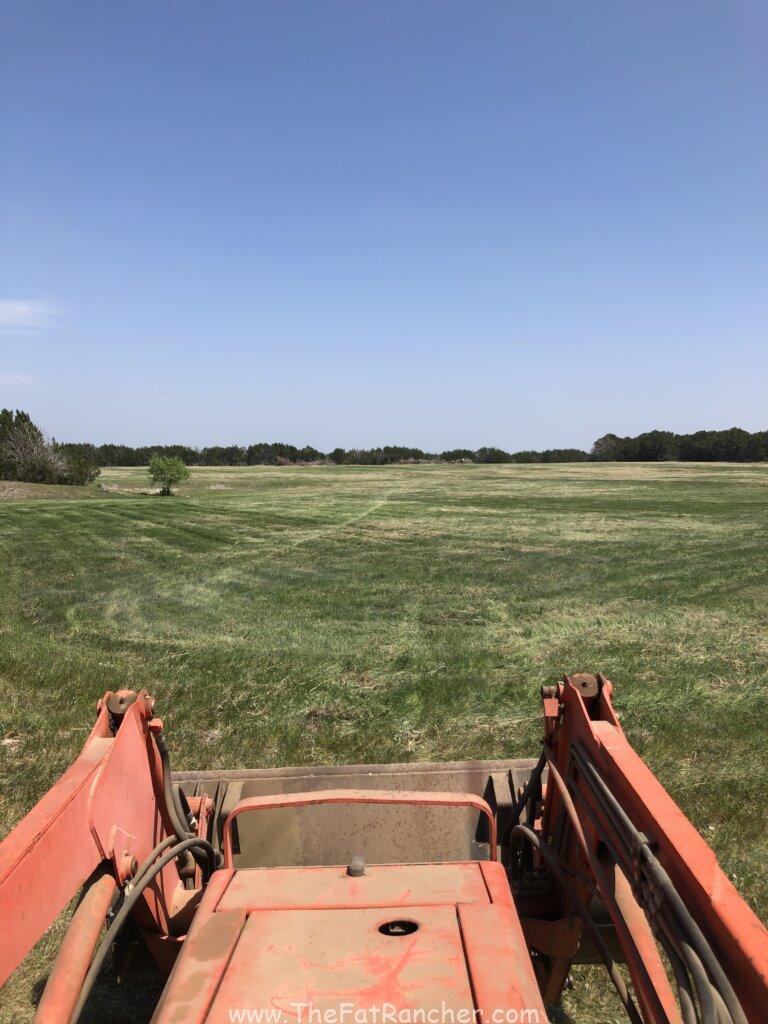
The first step to planting hay: Shredding the overgrowth. This has to be the most satisfying part of the ritual as it is easy to see the progress you’ve made and the carpet effect of cutting down the tall, brown weeds leaving only the emerging grasses.

Hawk in field
“Hmmm… What have we here for lunch?!”
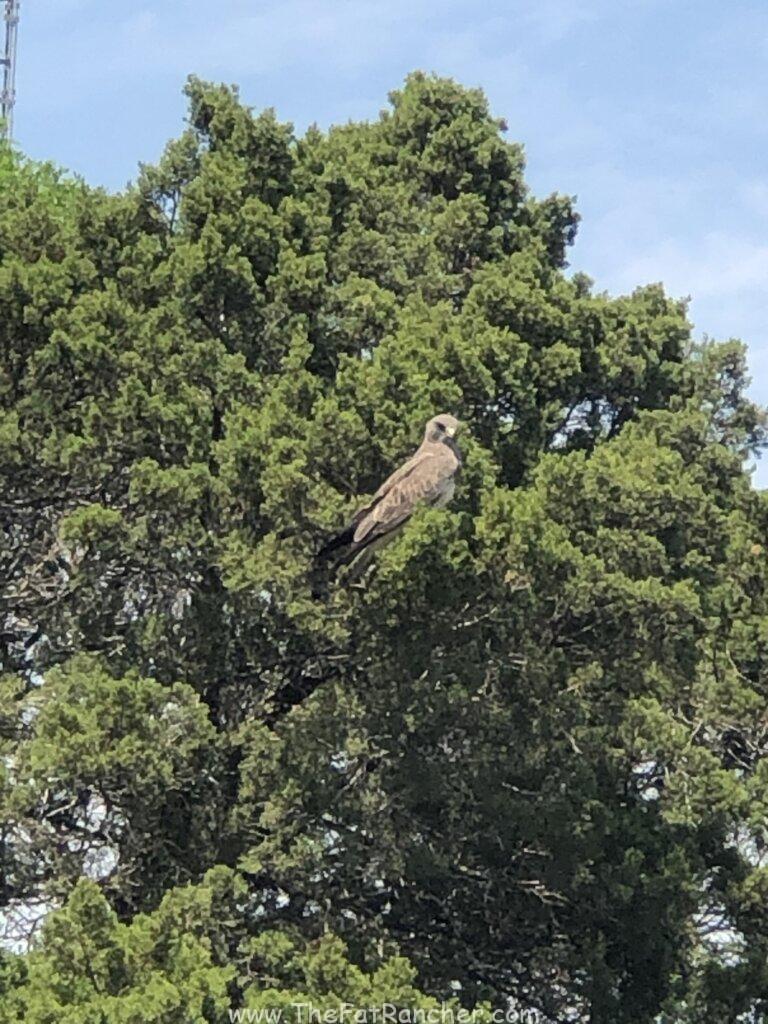
Hawk in tree
Mr. Hawk keeps a sharp eye on The Fat Rancher’s work.

Next comes the “booty bash.” This is the party which is roughly equivalent to riding a donkey over the mountains for 6 plus hours. You see, tractors don’t have any suspension. Towing a tine plow with a small tractor is equivalent to having your rump paddled for hours as you bump and hump over the rough pasture, tugging the plow through the rocks and grasses.

The effect gets even worse on the next pass, distributing the seed over the newly plowed field. Finally, you get to do it again, discing the seed into the soil.

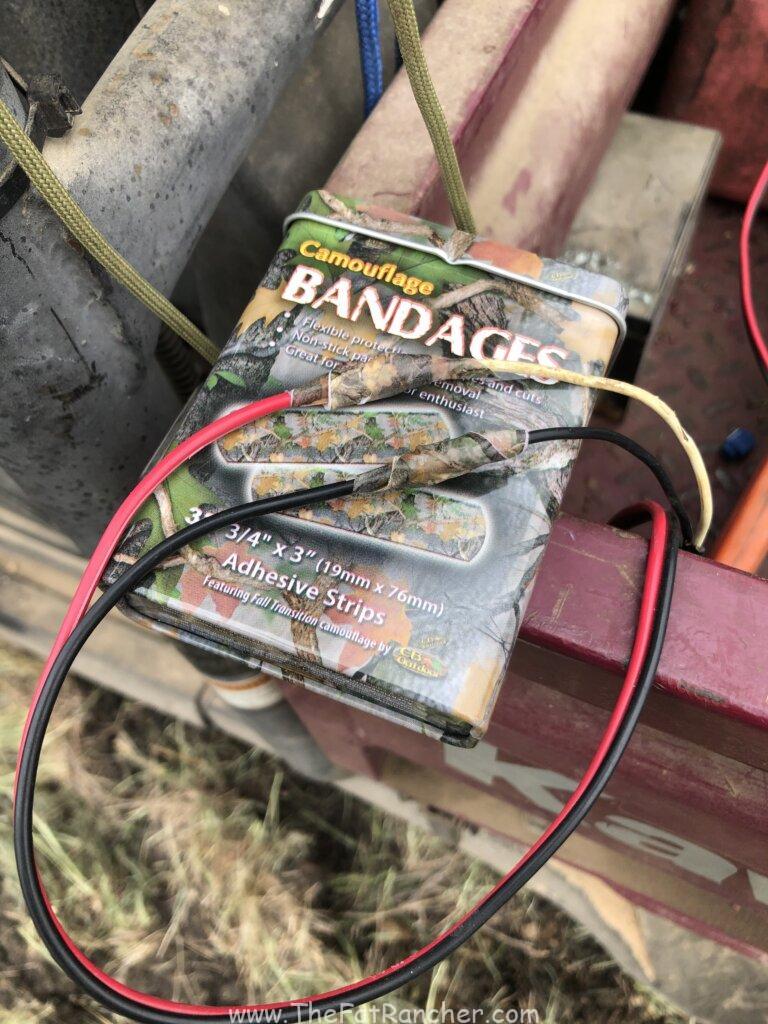
Using bandaids for wire insulation
This is what we call the Red Neck repair.

Finally, seeded and disced. Hot dawg! Now, will it rain? Those skies look awfully blue.

Two days later: Rain! Only an inch. But we have hope for more next week.

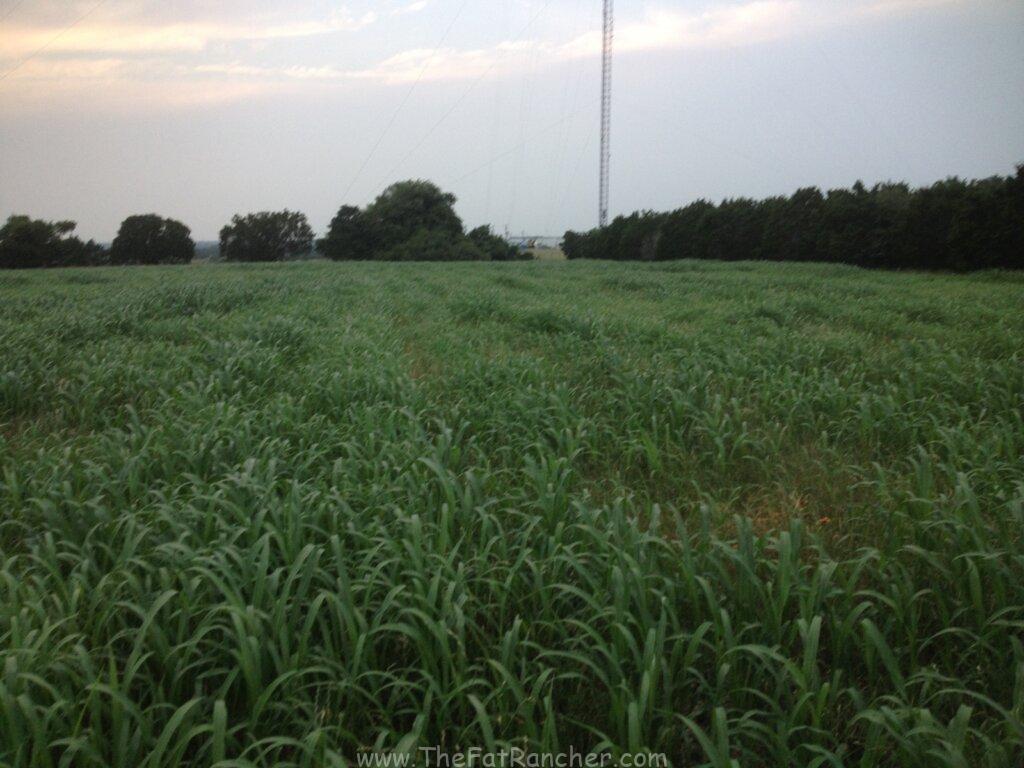
Sudan grass emerging

This is what we are looking for after planting hay. A nice carpet of Sudan grass for the cows.

Pasture after shredding

Mr. Hawk especially appreciates this effort as tasty critters emerge crying “run for your life!” The Hawk obliges.

Completetly shredded pasture
Main Pasture complete. Looks fit for a picnic!

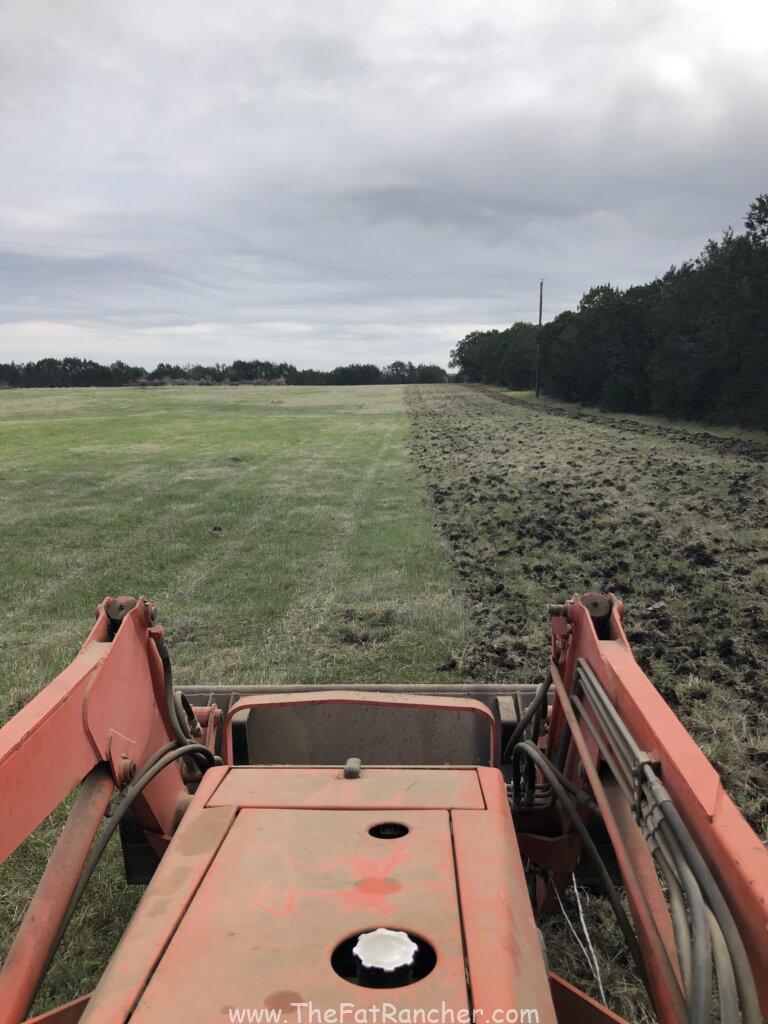
Plowing

Clouds lurk threatening to rain before seeding is complete.

Of course, no plant would be complete without several “breakdowns.”

First, we have an overheat. Back to the barn for a radiator dust blow-out, re-water, and tightening of the fan belt.

Next, a broken lift pin. These three-point hitch parts always seem to crap out as far away from the barn as possible.

Then a broken bracket on the seed applicator. The whole thing falls off taking the wiring with it. Time for a quick-fix Fat Rancher style… Yeah, camo bandages. That was my stocking stuffer this year!

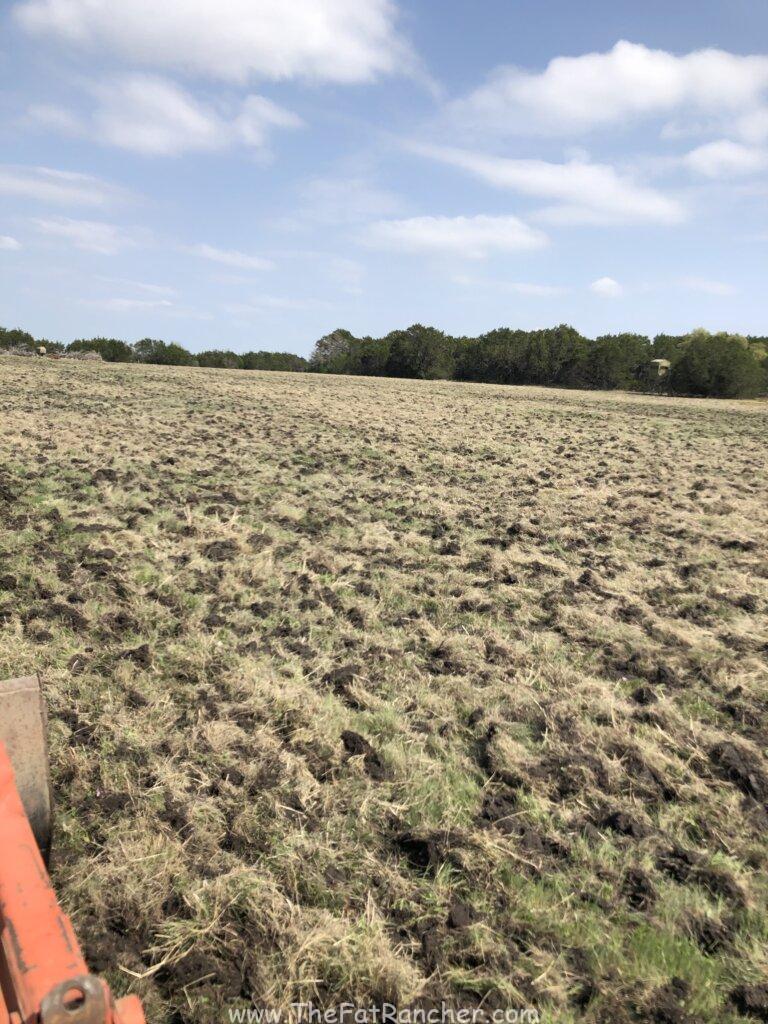
Discing

Disced pasture

Kolpin UTV Saddle Storage Box

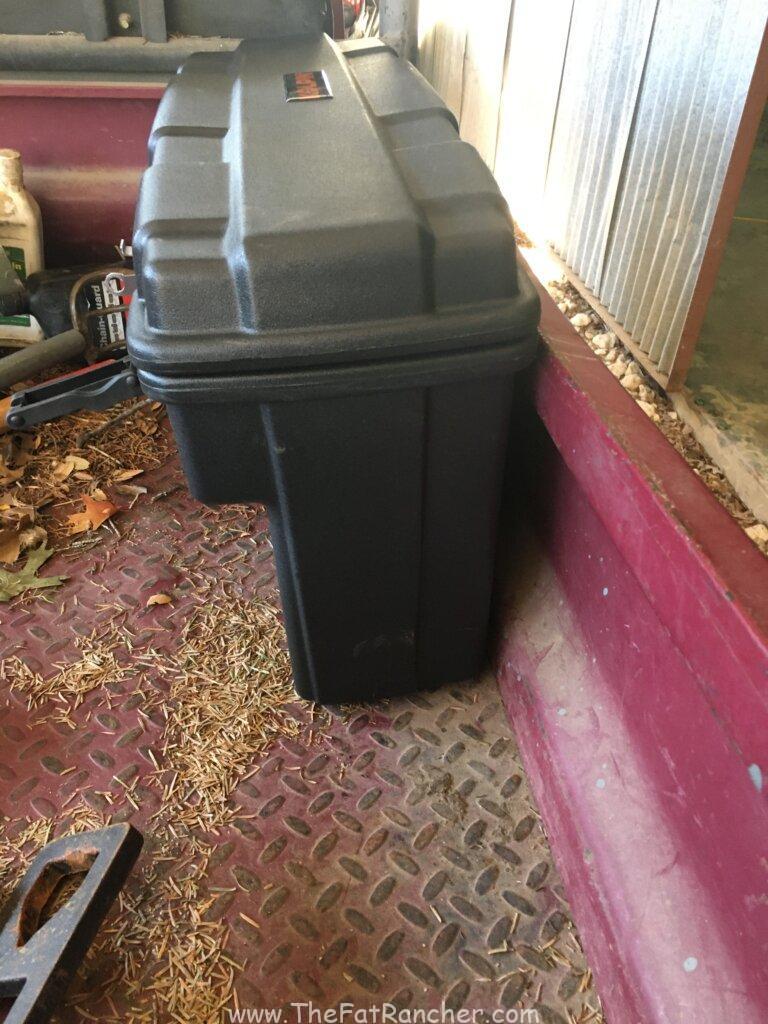
The Fat Rancher has lots of doodads rattling around in his UTV. So when he saw the Kolpin 4088 UTV Saddle Storage Box, naturally he was intrigued.

A typical day on the ranch for the Mule.

The Kolpin Saddle Storage Box is a roto-molded storage container with a hasp latched lid. The design is made to hang over the fender of your UTV. The body of the box has a generous lip which the lid fits over to keep the rain out of the box. A piano hinge is opposite of the two hasps with loops for a padlock.

Photo Courtesy Kolpin

Keeping the keeper tools stashed

While there are a bunch of items that may be loaded daily for a specific task, some things are kept in the Mule all the time. These include tow bars, poison ivy herbicide, chain saw tool and oil, tow ropes, and the like. Since the frunk is used for chain saw blades and safety gear, having a rear catch-all is helpful. And it makes TFR look organized!

Installation

In practice, our Mule bed side is concave, which would have made the box. So The Fat Rancher opted to mount the Kolpin storage box with the hasps oriented inward. This was accomplished with a couple of machine screws and nuts.

Concave side of the bed did not align with the box side.
This configuration allowed a more secure installation.

The finished product has been most handy for keeping tools at-hand and free from rattling around in the bed.

After photograph!

I purchased the Kolpin 4088 UTV Saddle Storage from Amazon for $93. While it is no longer offered on Amazon, a quick google search revealed several other sources for this storage box. The Kolpin store can be found here. I’ve been using this box for over a year now with good results.

And don’t forget about the Bubba Duffle. A ranch optimized stash technology for your drunk.

Tools organized in bags. Tool organization is the key.

Snowmageddon 2021!

0

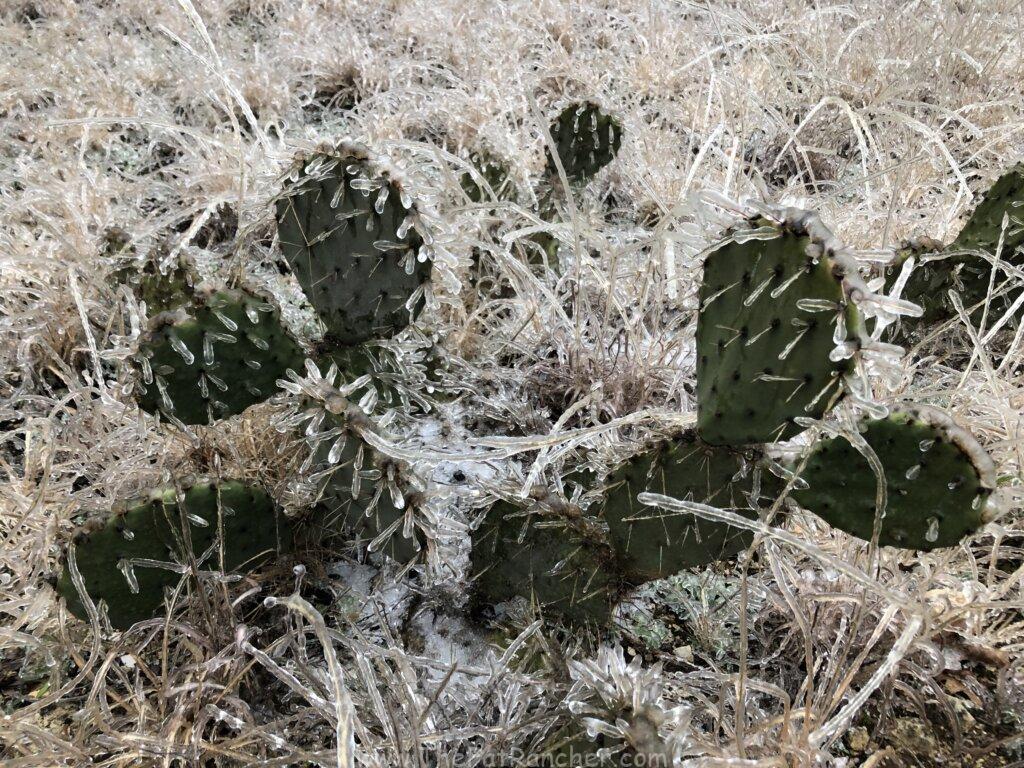
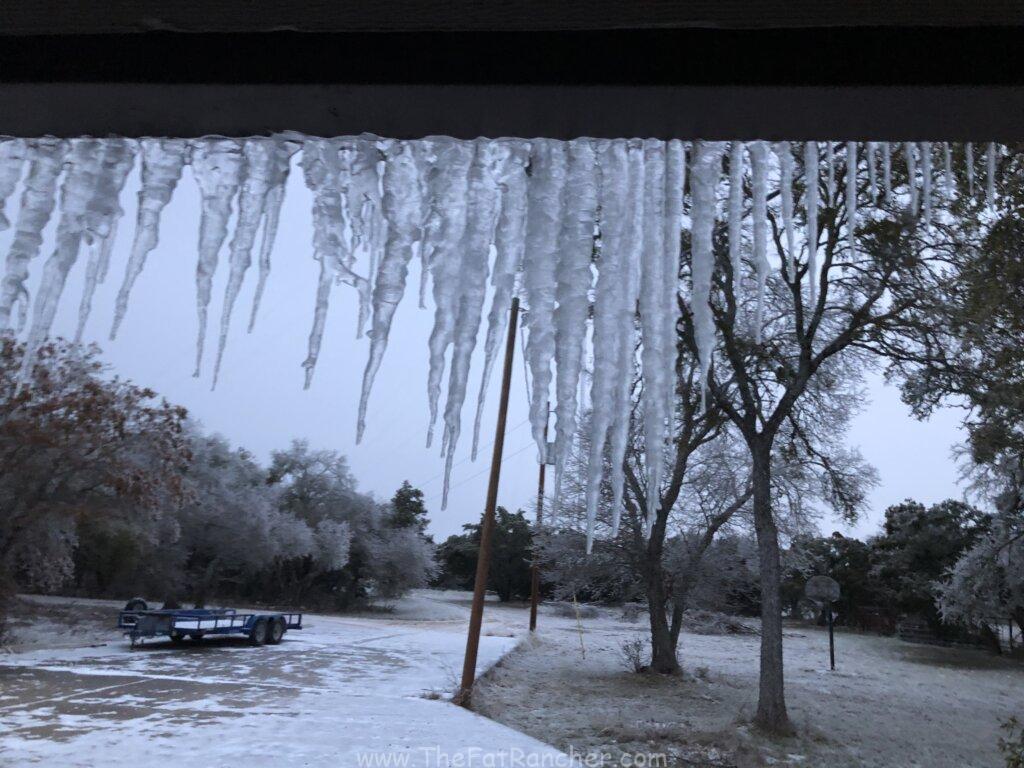
Well, Snowmageddon (extreme weather) in Texas is finally over. Actually, it’s been over for about four days now. But things still aren’t back to normal.

The Fat Rancher likes to think that he’s prepared for the worst. However, there is nothing like a snowacolypse to bring you back to earth. While we were fortunate that our power outages were brief, the loss of power did bring up several soft spots in our contingency plans.

Lessons Learned

Prep

First, you really must have a way to drain the hose bibs on the exterior of the house. People in low-temperature climates already know this, and their houses are designed for low temperatures. In Texas, not so much.

We are fortunate that our hose bibs are on a separate circuit from the drinking water in the house. So I will be installing a shutoff valve with a “drain feature” so that I can empty the pipes around the outside of the house. This is merely a vacuum break so that the water can be drained from the circuit.

Survive

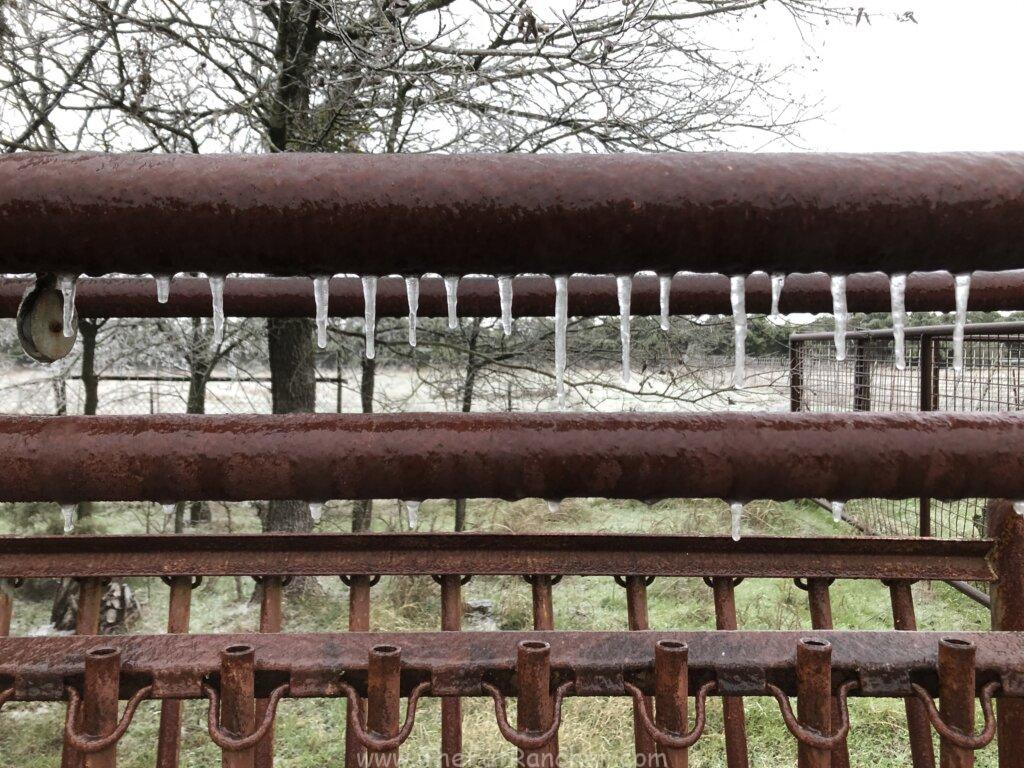
The squeeze chute iceth over

The second is that, while our high-efficiency fireplace insert cranks some heat, getting the heat into the living room when the power is off can be challenging. That electric fan will run when the generator is on. However, who wants to run the generator while the family is asleep? It’s a waste of precious fuel. So I’ll be looking for options to power that fan that moves the heat off of the insert into the room. Maybe we set up a generator on a treadmill so that Gus can keep us warm? Probably not…

Gus is partial to his heating pad. I don’t think he’s going to be down with running on a treadmill to keep his human family warm!
This product is available from Amazon.

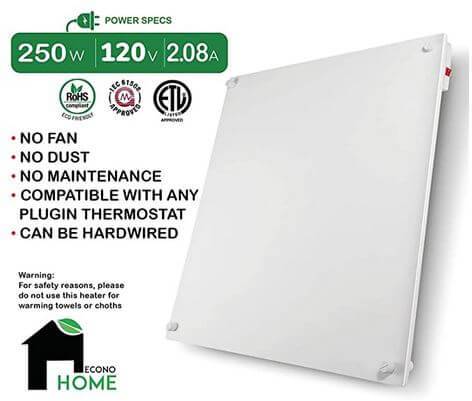
Next, having an unconditioned garage where the water conditioning equipment is located is problematic. I’ll be installing a radiant heat panel like the one pictured on the wall behind the water softener and whole house filter. I’ve opened this wall up and installed more insulation between the outside wall and the pipes feeding the water conditioning equipment, and I’ll mount the heater with a thermostat between these pipes and the equipment.

Thrive

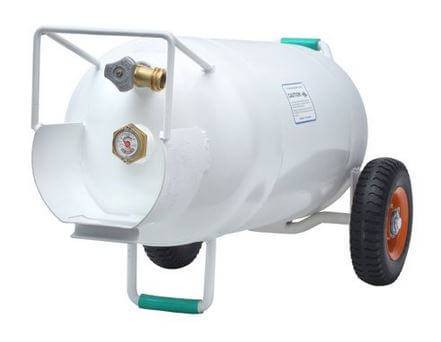
Finally, I’ll be buying a propane stove system of some sort and storing two 40 lb cylinders in the barn. The Fat Rancher lives in a 1980’s all-electric house and he likes a hot meal once in a while. When the ‘lectric goes out, there ain’t no skillet action. Besides we could use it to make breakfast tacos at the church when we are doing a natural disaster.

Flame Kings all New 40 lbs. Refillable HOG Propane Cylinder.

Additionally, a heater head can be affixed to these bad-boys for supplemental heat.

All-in-all, we are counting our blessings in spite of the week long disruption. But one can always be better prepared. And The Fat Rancher aims to do just that.

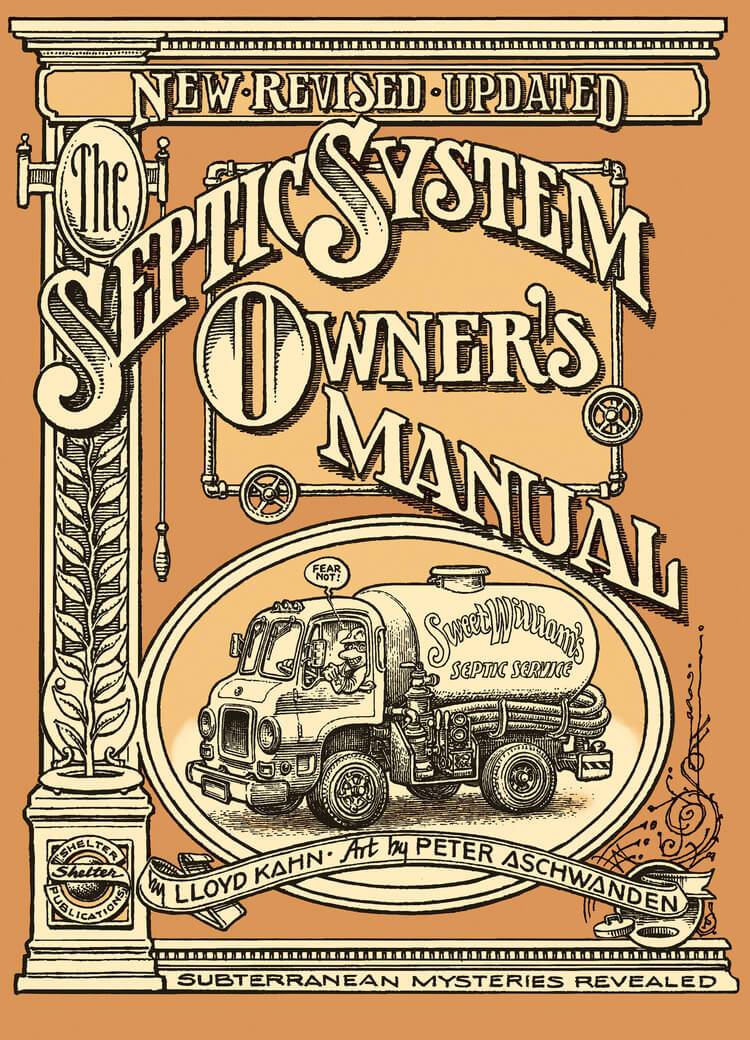
Book Review: Septic System Owner’s Manual

The Fat Rancher appreciates his creature comforts. At the top of the list is the flush toilet.

Prior to moving to the country, The Fat Rancher didn’t give much thought to this basic need. However, during the pre-purchase inspection of our “little slice of Texas heaven,” it became apparent that education on private sewage systems was in order. You see, you want to inspect and drain the septic system at the outset, lest you have a bigger mess to clean up later. Fortunately, the septic system we were buying was in pretty good operating shape. We only needed to empty it, add cleanout port fixtures, and repair a broken effluent elbow. Pretty basic maintenance.

Reprinted from Septic Systems Owners’ Manual by Lloyd Kahn, illustrations by Peter Aschwanden. Copyright © 2007 Shelter Publications, Inc., Bolinas, California

Since then I discovered a book that might be essential reading for anyone treating their own sewage. Promising “subterranean mysteries revealed,” Lloyd Kahn’s book Septic System Owner’s Manual provides a plethora of information on private sewage treatment including technical and biological theory, mechanical construction, and operation, in addition to practical maintenance.

Lloyd is truly a renaissance man, the kind of earthy and intrepid individual you are likely to meet in the country. A refugee from the insurance industry, Lloyd taught himself carpentry and construction, eventually becoming the Shelter Editor for The Whole Earth Catalog. This led Lloyd to author several books on innovative shelter design, and most recently a book on his family’s homesteading experience: The Half-Acre Homestead.

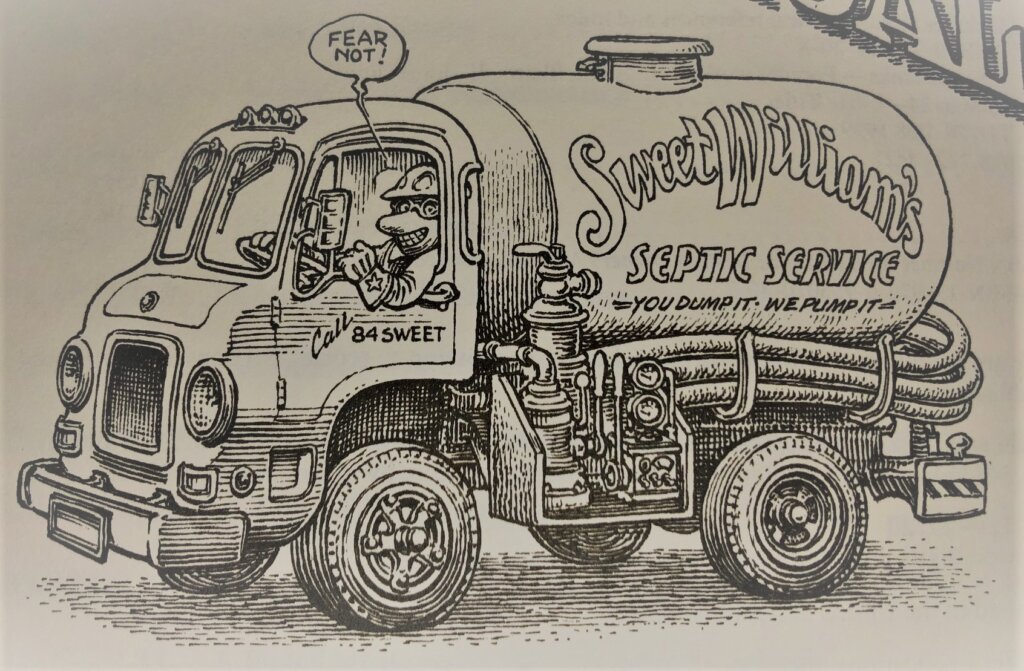
Reprinted from Septic Systems Owners’ Manual by Lloyd Kahn, illustrations by Peter Aschwanden. Copyright © 2007 Shelter Publications, Inc., Bolinas, California

Don’t expect to download Lloyd’s latest tome onto your kindle, however. Lloyd knows the true value of the “handbook.” Many of his writings are only available in paperback.

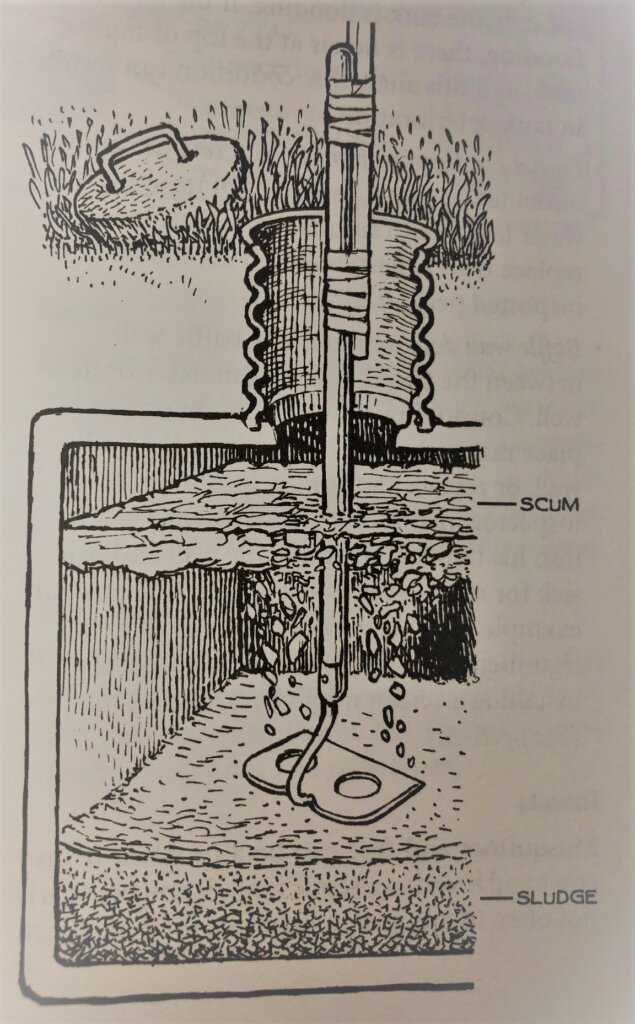
However, Lloyd fully embraces his writing craft with an extraordinary layout of ink on paper, fully illustrating his owner’s manual with extensive diagrams and artwork by Peter Aschwanden. From intricate diagrams of mechanical systems to cartoon characters, Mr. Aschwanden’s illustrations add a lyrically lighten of weighty prose of recycling man’s worst.

Reprinted from Septic Systems Owners’ Manual

With chapters on septic system tanks, drain fields, plumbing systems, and the role of soil and microbiology, Lloyd covers the subject of waste reclamation end-to-end. He also includes chapters on graywater systems, composting, and other advanced treatment techniques. Also included are a history of wastewater disposal and commentary surrounding politics and sewage. It is, after all, an inevitable convergence.

Lest you think that Mr. Kahn is a low-tech renaissance man, you should check out his Instagram feed at https://www.instagram.com/lloyd.kahn/. There you will find Lloyd’s latest musings from composting to shelter design, layering for warmth to blowguns. Mr. Kahn also has a YouTube channel at www.youtube.com/ekahn81.

The Septic System Owner’s Manual is a practical, well written and fully researched guide on private sewage systems. It’s informative as well as entertaining, no doubt due to the author’s earnest nature. This is one book the homesteader should have on their bookshelf.
You can purchase Lloyd Kahn’s Septic System Owner’s Manual at the Shelter Publications website: www.shelterpub.com or on Amazon.