
Know Your Fence Law
One of my favorite trite (but true) phrases!
But any landowner knows that fences can make or break an operation.
I would like to share a great resource (at least for *Texas* landowners). It’s called Five Strands-A Landowner’s Guide to Fences in Texas, Second Edition.
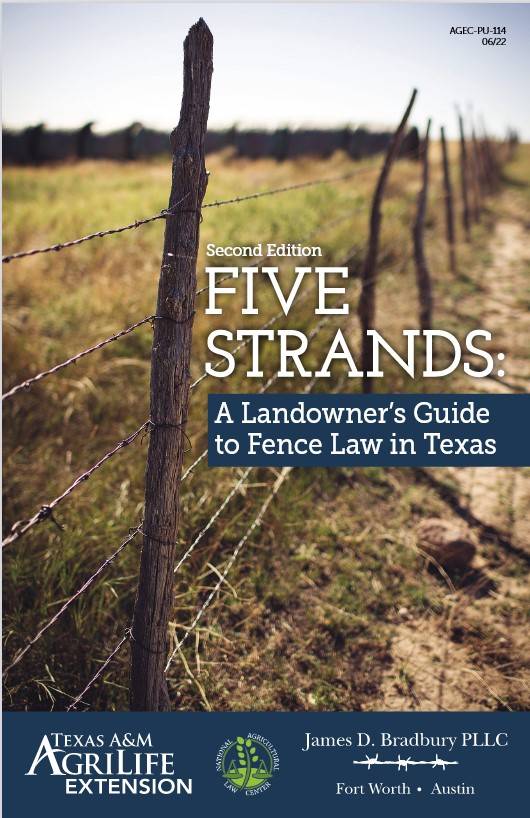
This revised handbook is from our knowledgeable friends at Texas A&M Agrilife Extension and Bradbury PLLC. In it, authors Tiffany D. Lashmet, James D. Bradbury, and Kyle K. Weldon explain, in layman’s, terms fence law in Texas. And, even though the focus is Texas, there are some nice tidbits for everyone else too.
From the TAMU Agrilife description: “This handbook was written in terms that “normal people” (as opposed to lawyers) can understand and is designed as a resource that can be thrown on the dash of a pick up along with a ranchers’ other important documents. Our goal was to help answer common questions related to fence law that come up frequently for Texas landowners and livestock producers.”
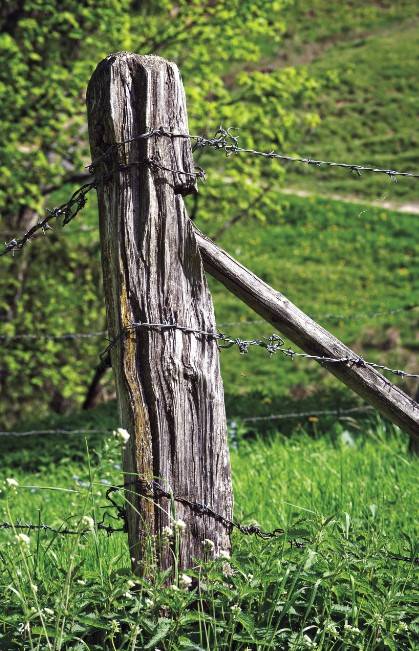
Plus, it has some great photos of fences. Really!
Thanks to TAMU Agrilife for a great resource.
Did You Know?
- Texas is an open-range state since the 1800s. Livestock owners are not required to fence in their livestock.
- However, local county stock laws and the US and State highways create closed ranges
- There is not a comprehensive list of closed-range counties. Contact your local sheriff’s office to find out if your county is subject to closed-range requirements.
- Entering a neighbor’s property to clear brush could be considered trespassing. If your neighbor doesn’t consent to your clearing, you may have to back the fence onto your property to keep it clear.
- If the fence is mutually owned, one owner may not remove it. Further, if your fence is attached to a fence owned by someone else, you must give 6 months’ written notice of your intent to disconnect your fence.
- You may trim limbs hanging over your fence only to the property line. The location of the trunk determines the ownership of the tree.
- Adverse possession is a thing in Texas law. This refers to the egregious use of someone else’s land. Grazing is not typically enough use to gain title. However, if you offset your fence into your land and your neighbor builds a fence on your land, you may have a problem. Offset fences are best supported by a property line agreement with the neighbor along with regular inspection for encroachment.
Thanks to Texas A&M AgriLife Extension service for this handy guide to fence law in Texas.